Tag Archives: heresy

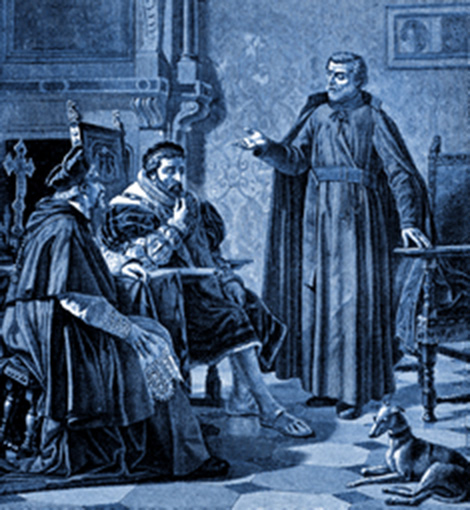
St. Robert Bellarmine on judging a Pope

There are a lot of comments going about the internet attacking Cardinal Burke for his criticism of Pope Francis. Now in reality, Cardinal Burke’s criticisms have been mild, always minimizing Francis’ damage. Some have gone so far as to call Cardinal Burke Schismatic.

I wonder what they would have said about St. Robert Bellarmine, saint and Doctor of the Church, who said the following (to my knowledge, this has never been rendered into English before.

St. Robert Bellarmine makes an interesting comment in the famous chapter of De Romano Pontifice where he discusses the question of the loss of Papal office. It is in the article immediately before the one sedevacantists frequently use, namely in De Romano Pontifice, Bk II, Chapter 30:

“The third opinion is on another extreme, certainly, that a Pope cannot be deposed either through secret heresy, or through manifest heresy. This recalls and refutes Bishop Turrecremata (loc cit) [Bellarmine is noting in the previous point, citing this Bishop, where he rejects that a secret heretic can be judged] and certainly is an improbable opinion. Firstly, that a heretical Pope can be judged, is expressly held in Can. Si Papa dist. 40, and with Innocent III (serm. 2 de consec. pontif.) And what is more, in the 8th Council, (act. 7) the acts of the Roman Council under Pope Hadrian are recited, and therein contained, that Pope Honorius appears to be justly anathematized, because he had been convicted of heresy, which is the only reason permitted for inferiors to judge superiors. It must be noted, that although it is probable that Honorius was not a heretic, and that Pope Hadrian II was deceived from corrupt examples of the VI Council, and Honorius was reckoned falsely to be a heretic, nevertheless we cannot deny, in fact Hadrian with the Roman Council, nay more the whole 8th general council had sensed, in the case of heresy a Roman Pontiff can be judged. Add, what would be the most miserable condition of the Church, if she would be compelled to acknowledge a manifestly prowling wolf for a shepherd.”

Aude Sapere 006 – Meet Archbishop Bruno Forte

Download                       Play in New Window

bruno_forte

Today on the Aude Sapere podcast, we will take a look at the author of the “homosexual passages” of the Synod’s mid-term report which have predictably rocked the headlines around the world. Continue reading

Franken-Church: The managed Synod’s betrayal of Jesus Christ

"..and wuv, twue wuv..."

“..and wuv, twue wuv…”

We all knew this Synod was going to be bad. I have warned people privately that it would be a watershed moment of Francis’ pontificate. Lately I’ve been given to creating similes to correctly encapsulate Francis, and this latest one I think is the most apt, as we shall see. “Francis is to the Church, what Yoko Ono was to the Beatles.”

It was clear from the beginning that this synod was rigged to produce the effect that Francis wanted. A source I have, who is actually in Rome, told me that the African Bishops as a block loudly protested many of the Synod proceedings, but were shut down Ottaviani style. There is little better that I could say than what Chris Ferrara has said on the Synod:

Let us call this Synod what it is: a secretive, manipulated, progressive-dominated cabal, led by septuagenarian and octogenarian diehards of the conciliar “renewal,” who are rushing to finish their “work”—so rudely interrupted by Pope Benedict—lest death release the Church from their clutches before they are quite done.

So where are we at now? Let’s look at what is a synod, what this document actually is, its contents and then consider where all this is going.

What the heck is a synod?

A Synod is a gathering of bishops to discuss matters of faith or discipline, which can range from advisory to being part of the ordinary magisterium, such as some early synods. They fall short of an ecumenical council in their substance, and their authority is more or less what a Pope chooses to give them. Historically it was an easy way to discuss difficulties without recourse to an ecumenical Council, which in the early Church were called by the emperor, or by the Pope who then pushed for the Emperor’s consent, as was the case with Pope St. Leo the Great, who pushed the Roman empress Pulcheria for an ecumenical council at Chalcedon. Since Vatican II, however, the Synod has been little more than a mini-council continuing Vatican II, where all the Bishops get together and pat themselves on the back for what a wonderful job they are doing in the Church [sic]. Michael Davies, I think, correctly described this process as the abandoning of the Ecclesia Docens (Teaching Church) for the Ecclesia loquens (talking Church).

Typically after a Synod, the Pope commissions a document to more or less summarize what took place, and then writes  a post synodal exhoration, like Pope Benedict’s Charitas in Veritate.

What is the document making the headlines?

The current document which we are talking about is the Relatio post Disceptationem, literally, the report after the debate, although, per what Pope Francis declared prior to the Synod’s opening, the original is Italian rather than Latin, which leaves me reading with my dictionary since my Italian, though decent, is not pitch perfect. However, I have noticed that the Vatican translators have done a good job, showing that when a document is to their liking, they will happily and promptly translate, unlike in Benedict’s pontificate. It is not infallible, nor is it an official act of the magisterium. It does, however, reflect the Pope’s thinking, and constitutes the direction which he would like to go. Which, moreover, begs the question, how did a 6,000 word document get written by 6 men and get translated very well into multiple languages that quickly? Unless, as many analysts reckon, it was preplanned.

The betrayal

Liberal groups are hailing this document as a wonderful step forward, while conservative and pro-life groups, even the head of the Polish Bishop’s conference, have called this document a betrayal. These are strong words against the document from groups that normally eschew the slightest criticism of the Pope, and we shall see why.

The Relatio, declares:

From the moment that the order of creation is determined by orientation towards Christ, it becomes necessary to distinguish without separating the various levels through which God communicates the grace of the covenant to humanity. Through the law of gradualness (cf. Familiaris Consortio, 34), typical of divine pedagogy, this means interpreting the nuptial covenant in terms of continuity and novelty, in the order of creation and in that of redemption. (no. 13)

What is this “Gradualness”? It would appear, the Relatio is saying juxtaposing two entirely contrary things. Continuity, and Novelty, which do not go together, at least in the same respect. How can marriage be interpreted in terms of both continuity (i.e. faithfulness to God’s commands) and novelty (changing them to suit man?). One might argue it means dealing with new novelties, but the next paragraph makes it abundantly clear that they mean novelties to suit man.

Jesus Himself, referring to the primordial plan for the human couple, reaffirms the indissoluble union between man and woman, while understanding that “Moses permitted you to divorce your wives because your hearts were hard. But it was not this way from the beginning” (Mt 19,8). In this way, He shows how divine condescension always accompanies the path of humanity, directing it towards its new beginning, not without passing through the cross. (no 14., my emphasis)

Notice the demonic inversion. They take what, in the clear meaning of the Gospel, is a rebuke against the Pharisees, and they turn it into “understanding”. Tolerance. This is just an act of poisoning the well, for, they are positing as a starting point the “tolerant”, “non-judgmental” and “pastoral” Jesus, like unto that creature we call the average post Vatican II bishop (at least the ones who don’t get fired, or receive Apostolic Visitations!). Moreover, no. 13 above quotes John Paul II’s Familiaris Consortio, itself a document following a family synod. Let’s see what his notion of “Gradualness” is:

Married people too are called upon to progress unceasingly in their moral life, with the support of a sincere and active desire to gain ever better knowledge of the values enshrined in and fostered by the law of God. They must also be supported by an upright and generous willingness to embody these values in their concrete decisions. They cannot however look on the law as merely an ideal to be achieved in the future: they must consider it as a command of Christ the Lord to overcome difficulties with constancy. “And so what is known as ‘the law of gradualness’ or step-by-step advance cannot be identified with ‘gradualness of the law,’ as if there were different degrees or forms of precept in God’s law for different individuals and situations. In God’s plan, all husbands and wives are called in marriage to holiness, and this lofty vocation is fulfilled to the extent that the human person is able to respond to God’s command with serene confidence in God’s grace and in his or her own will.” (Familiaris Consortio, no. 34).

So you see, what the manipulators of this Synod have done, before we even get to the troubled sections on homosexuality, is to twist the previous teaching of John Paul II, to make it look like they have a saint in their camp. This is for the obvious reason that the goals outlined by the “Synod Party”, as I have called them, are explicitly contrary to John Paul II.

There is a lot of irony in this. It is Francis who canonized John Paul II, and now it is he and his regime who are discarding the late “sainted” Pontiff’s teaching, because it is inconvenient to the “new Gospel”. What was the point in canonizing JPII except to baptize his personalist and phenomenological writings? Well, that gets sticky as well. The point of canonizing JPII had nothing at all to do with the glory of the Church, or his sanctity, or any other consideration. It was purely a canonization of Vatican II, whose spirit, according to Cardinal Kasper, is alive and well at the Synod.

So the “official” Synod language has moved to gradations of following God’s commands. Just as was declared in the first week “We must not talk about living in sin, that is harsh language.” The teaching of John Paul II, on that rare occasion it was clear, namely on life and family issues, is cast aside for the emotive feeling of those who disobey Christ’s commands, amplified by the media presentation and the pet beliefs of the minority of cardinals handling these things.

What I want to do, however, is avoid the scandalous passages on homosexuality. There are numerous other websites doing that. Anyone with a clear sensus catholicus knows there is a great difference between treating homosexuals with respect in a civil and public sphere, and at the same time to welcome them into our homes and communities as though their behavior were perfectly acceptable in light of the Gospel.

The real problem is that no one is talking about the fact that the “homosexual identity” is a completely modern creation. People who engaged in homosexuality in antiquity, or the middle ages, or the renaissance, did not identify as “gay” or anything like it. They were often married (to women), and homosexual acts were something they engaged in on the side in limited circumstances. This is more or less how sodomy occurred, and its enforcement historically was sporadic based on how public the business became, not only in Europe, but even in Medieval Islamic societies. There was no such thing as a “gay identity”. The emergence of that said identity, apart from any question of the orientation (which the Catechism teaches in unity with the tradition are disordered) has been something totally different from how homosexual activity affected society in the past. The “identity” has arisen with an animus against western tradition, the institution of marriage and the Church.

What is clear about the “homosexual passages” of the Relatio, is that the man who wrote the document, Cardinal Edö, is scrambling to show how he didn’t write it, didn’t know anything about it! Maybe that’s true, but there is someone who did know something about it, and approved it, as he approved the 6 commissioners who wrote the document, that is Pope Francis himself. Anyone who would do anything but lay the blame for this debacle at the feet of the Pope is simply delusional. Those responsible for the Relatio, are canonically speaking modernists. They are actually trying to harm the Church. As some have noted, the purpose of the homosexual clauses are not to force them into the final document or make them binding somehow. The clear majority of the Synod will not allow it.  What they want to do is wound the Church’s unity, and push the majority who are opposed to them on the defensive. This is exactly the tactic followed at Vatican II in the rejection of the preparatory schema. For, all opposition to those passages in the Relatio document (a novelty because usually you don’t release anything until the end) will be read in light of what already came out, and appear reactionary or damage control. The spirit of the world has already seen the first, and it will be treated as doctrine when it has as much weight as a fart during a sermon. (Sorry for being crass, but the analogy is nice given the contents of this document).

Moreover, not only will they put pressure on the Synod Fathers, but it will aid in overlooking the debate on communion for the divorced and remarried (i.e. those who, by the words of Christ Himself, are committing adultery), or to be used to force a concession on the matter. The fact is this synod is an act of manipulation, and a very obvious one at that.

Demonization of Africa

In any other context, the attack on Africa and Africans would be held as racist, unacceptable, immoral, etc. But when it is coming from the Cardinal patron of homosexual and the divorced and remarried, namely Kasper the friendly wolf, it is perfectly acceptable.

Indeed, in an interview today, Cardinal Kasper said:

Cardinal Kasper: The problem, as well, is that there are different problems of different continents and different cultures. Africa is totally different from the West. Also Asian and Muslim countries, they’re very different, especially about gays. You can’t speak about this with Africans and people of Muslim countries. It’s not possible. It’s a taboo. For us, we say we ought not to discriminate, we don’t want to discriminate in certain respects.

ZENIT: But are African participants listened to in this regard?
Cardinal Kasper: No, the majority of them [who hold these views won’t speak about them].

ZENIT: They’re not listened to?
Cardinal Kasper: In Africa of course [their views are listened to], where it’s a taboo.

ZENIT: What has changed for you, regarding the methodology of this synod?
I think in the end there must be a general line in the Church, general criteria, but then the questions of Africa we cannot solve. There must be space also for the local bishops’ conferences to solve their problems but I’d say with Africa it’s impossible [for us to solve]. But they should not tell us too much what we have to do. (Source)

If that is not one of the most arrogant and condescending remarks from a Churchman, I don’t know exactly what is. Further, it is proof that what the modernists most criticize they are the most guilty of. You have seen it in Francis, warning people not to be obsessed with themselves, then he goes out of his way to get a biography of himself published. He lashes out about not judging, and judges all the time! The modernists criticize the pre-Vatican II Church for being closed minded, unwilling to look at other opinions, and though this is false, it is exactly true of the modernists post-Vatican II. Why must the Africans “shut up”? Because they are more orthodox and faithful to the gospel, at the very least on these points.

The Francis regime and their manipulators knew that coming in. This is why the beginning of the Relatio declares:

Some cultural and religious contexts pose particular challenges. In African societies the practice of polygamy remains, along with, in some traditional contexts, the custom of “marriage in stages”. In other contexts the practice of “arranged marriages” persists. (Relation, no. 7)

Now, is that strictly true? Is it true amongst Christians in Africa? Here I know several people from Nigeria and Kenya, who are in a position to know about a lot of these issues. The fact is amongst Christians in Africa, this is a minority problem. Polygamy in particular, is more of a problem among the Muslims, since it is permitted by their religion. Many African cultures have a latent cultural Islam left over from the middle ages, even though they are pagan rather than Islamic.

Nevertheless, it is a preemptive strike against African bishops. You can’t tell us what to do, you have these problems! This should shatter the myth of openness and inclusion.

I could go on, but this has already exceeded what I intended, and it is probably wearisome. I have several other posts coming on these topics soon. To wrap it up however, it is worthwhile to revisit prophecy. Bishops will oppose Bishops, and Cardinals will oppose Cardinals. Here we are.
 

Unecumenical Saints: St. Peter Canisius

saint_peter_canisiusSt. Peter Canisius is perhaps one of the more neglected doctors of the Church. Amongst the names of the great saints in his era, of Borromeo, Ignatius, Philip Neri, Francis Xavier, John of the Cross, Teresa of Avila, St. Pius V, etc., his name tends to get lost. In Germany and Switzerland, however, his name was once synonymous with Catholic orthodoxy. St. Peter Canisius is almost unparallelled in his output, and even Protestant theologians praised and admired him for his holiness and learning.

One of the things Canisius could not brook was heresy. Here is an excerpt from a letter he wrote  which is quoted in “A Champion of the Church: The Life of St. Peter Canisius”, which is going to be reprinted by next week, by Mediatrix press, so watch for that. In this letter, he is writing on the miserable state of Catholic universities.

“The masters of good and solid doctrine are few in number here and are not anxious to make their students better. Most of the professors have little standing from the point of view of science. In their teaching they are less concerned with the truths of the Gospel than with doctrines favoring the passions. Among them are secret or open heretics, who spread, more or less openly, the poison of error in the minds of their students. Left to themselves and without guidance, young men have no love for study and no desire to advance in science. False doctrine and immorality have been spread among the people. The faithful are no longer Catholics except in name; they live without giving a thought to their souls and a future life; they despise the authority of their pastors and of the Church. I write this in order to arouse your charity to pray that grace may abound more where sin has already abounded.”
Peter Canisius and his companions undertook this work of reforming morals and thought which was to be the great endeavor of his life. Not content with giving his lectures in theology, he endeavored by special lessons to make good the lack of preparation of many of his students. He was especially concerned with their souls, and succeeded in leading many back to the practice of piety. Having been appointed Rector of the University, he displayed great zeal in introducing necessary reforms. Thus he forbade the sale of works which were dangerous for faith or morals. The position of Vice-Chancellor was offered to him after his tenure of the office of Rector. He accepted it only for a specified time and on condition of not benefitting by the emoluments attached to the same.”

champion_of_the_churchToday, he would be said to be too rigorist, which is not very merciful.
Shameless plug moment: The book from which this quote is taken from, A Champion of the Church, has just come back into print, courtesy of Mediatrix press (which I run). Consider buying a copy.


The Feast of Sts. Peter and Paul, and the Instrumentum Laboris

Caravaggio-The_Conversion_on_the_Way_to_Damascus

The Conversion of St. Paul -Caravaggio

640px-Michelangelo_Caravaggio_038

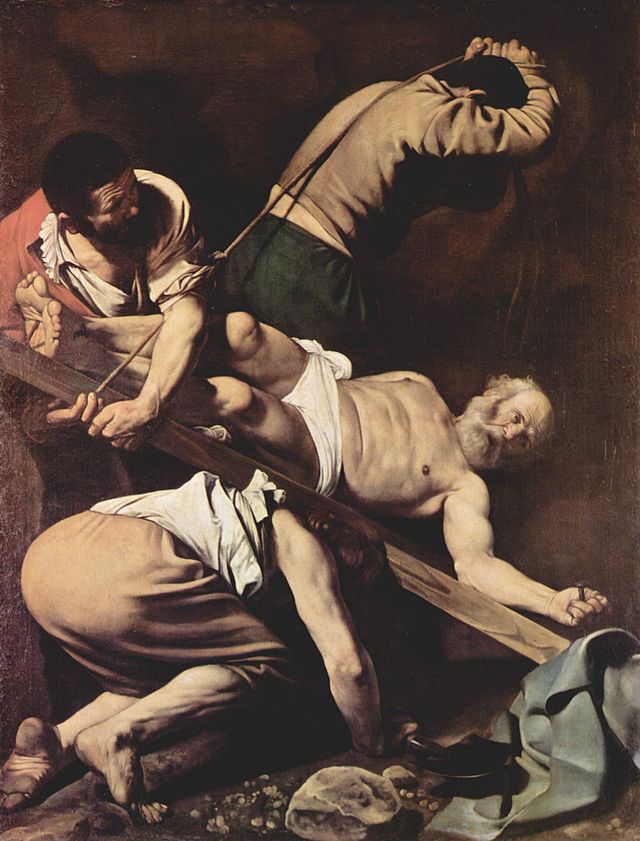
The Crucifixion of St. Peter -Caravaggio


We, just yesterday, had the feast of Sts. Peter and Paul, which is a holy day of obligation in most of the world, but for some reason not here in the USofA. Not sure why, apart from the general trend to not disturb people’s comfortable lives by the spectre of going to Mass on a weekday. This year of course that was not a problem.

One of the things I find fascinating is that the very same feast is celebrated in all the Eastern Rites of the Church as well, according to their own liturgical customs and traditions, which is to say they did not copy it from the Roman Rite, the same feast developed organically in their own traditions. Thus, the feast of St. Peter and Paul is also a feast for the unity of the whole Church with its head, which is why it is a holy day of obligation (again, except here).

There is another reason why the Church specifically honors these two saints together in one feast day. In the Neronian persecution they in fact died separately, but nevertheless, together sanctified Rome by their blood. Rome was a great persecutor, and would continue to lay up many martyrs to the faith. Yet, the blood of the two Apostles firmly established the Church in Rome, and provided strength to it while under siege for the next 250 years. The bones of St. Peter and St. Paul were cherished by Christians, and moved into the catacombs to protect them from desecration.

The two paintings above, hang in the Church of Santa Maria del Populo, in Rome, right as pilgrims would traditionally enter the city from the north. They are in a side chapel which has an interesting history. The paintings there were part of a challenge between Caravaggio and a rival artist, Caracci, who painted in what is called the “Mannerist” style, generally loathed by art historians, though it in fact has many good points, especially for faith. Caravaggio was temperamental (to say the least), and annoyed that Caracci got the altar piece, decided to show his displeasure by painting the horse so that its rear end would be facing Carraci’s painting. Nevertheless, he provides a great image, the blinding light. Paul is off of his horse and his eyes are blinded, as the light shines upon him. A light that is too pure to be perceived without an interior light, namely the light of faith.

Now, St. Thomas makes the observation, that a single heresy is sufficient to corrupt the virtue of faith, when he says:

…qui discredit unum articulum fidei non habet habitum fidei neque formatae neque informis.

…one who disbelieves [even] one article of faith does not have the habitus of faith, either formed or unformed.

-Summa Theologiae II-II Q.5 a.3

Now St. Paul, who preached the faith everywhere, was martyred at a place which is now called Tre Fontane, or the Three Fountains. When his head rolled down the hill, three fountains sprang up in the places where it had rolled. Now, I was just in Rome in February, and the fountains were not flowing. You could see clearly that at one time they were because of the moisture in the rock in that part of the Church where the fountains are preserved. I asked a priest who was knowledgeable of it, what happened to the fountains? He said that he was told they stopped flowing in [surprise] 1965.

If true, this is significant because Paul represents the age of the gentiles, but the apostasy of the end times both in the book of the Apocalypse and in private revelation is that the gentiles will give up the faith. Thus we come to the Instrumentum Laboris for yet another synod of bishops. The many issues being discussed center around some pretty serious moral issues, which constitute part of the great upheaval of Western culture, namely divorce and remarriage, or, put another way, using your spouses like used cars, trying to trade them in for a better deal. There are many who would like to see a change in the Church’s praxis to allow for the sanctioning of divorce and remarriage by saying that people who have done this, without a judgment of the Church with respect to the validity of their first marriage, may come to communion. Notably Cardnal Kasper, who demonstrated yet again he hasn’t the faintest idea of what the Orthodox actually teach. This provoked a reaction, even in the curia, with many clarifying what the issue actually is. Nevertheless, going into this synod we have an Instrumentum Laboris, which proposes to give place to those advocating these very things. I haven’t finished the whole document, but certain things stand out as particularly troubling. This first I read yesterday:

Finally, the observations insist that catechesis on marriage and family, in these times, cannot be limited exclusively to the preparation of couples for marriage. Instead, a dynamic catechetical programme is needed — experiential in character — which, through personal testimony, shows the beauty of the family as transmitted by the Gospel and the documents of the Magisterium of the Church. Long before they present themselves for marriage, young people need assistance in coming to know what the Church teaches and why she teaches it. Many responses emphasize the role of parents in the catechesis on the family. As afar as the Gospel of the Family is concerned, they have an irreplaceable role to play in the Christian formation of their children. This task calls for a thorough understanding of their vocation in passing on the Church’s teaching. Their witness in married life is already a living catechesis in not only the Church but society as well. (Instrumentum Laboris, n.19)

There is a big problem here. What is proposed is “more catechesis!” This is ultimately like throwing more money at a problem. The crisis of family is not just a question of shifting values, and false ideologies. The problem of families in the modern western world is that world was built by atheistic capitalism, which has no notion of the common good and scoffs at the traditional resources large families had to support mothers. It overlooks entirely the crisis of fatherhood. It overlooks the fact that authentic Church life requires an authentically Catholic society to function. The atheistic societies that the Vatican has been praising for 50 years cannot support the family, but only tear them down. It doesn’t address that many people actively reject what the Church teaches, and as such don’t have the virtue of faith. What is needed, is more prayer and sacrifice, a liturgy that renews people’s lives, and building holy people to merit grace for the errant. This however will not be found in the document.

The most troubling thing, however, is what I saw quoted on Rorate Caeli, directly from the document:

The difficulties that arise in relation to natural law can be overcome through more attentive reference to the biblical world, to its language and narrative forms, and to “propose bringing the issue to public discussion and developing the idea of biblical inspiration and the ‘order in creation,’ which could permit a re-reading of the concept of the natural law in a more meaningful manner in today’s world.” [Instrumentum laboris, 30]

In other words, the natural law, written on man’s heart, is going to be re-read. This is the type of progressive language that is typical of modernism. Re-read, rediscover, so that something contrary to what came before is now a “harmonious development”, a new fruit of “spiritual riches” to contemplate. In other words, this is more of the same.

The blinding light Caravaggio so powerfully paints cannot be seen by those who are spiritually blind. Yet it seems those are the ones writing these documents!


Heresy Matters….

How many times have you heard this?

All God really cares about is that you are a good person. Or God doesn’t really care about what you believe, just as long as you try to be good. Now would it really surprise you to know that these statements were made by Catholic school students who had 11 years of “Catholic” education? Probably not.

Many of us however, when we are met with the most common liberal/secular challenge are somewhat dumbfounded. Could God really damn someone to hell because they didn’t believe the right thing? So what if someone didn’t teach exactly the right thing?

If you want to really mess them up, just say yes, it is the least expected answer. Yes, if you do not profess the One, Holy, Catholic and Apostolic faith, you will not be saved. Obviously there are gray areas. Intention comes into play, so someone who teaches heresy without knowing and without correction, then of course, God takes intention into account.

Remove all gray areas for a moment. That is the biggest smokescreen used by liberals to muddy the waters of truth. Pure black and white, does right doctrine matter? YES.

The attempt to remove dogma and doctrine from the place of importance in religion is a modernism. If that was the case, and they didn’t matter, then Our Blessed Lord would not have wasted his time teaching theology, or preaching the resurrection, or for that matter rising from the dead. He would have merely taught people how to share, and probably voted Democrat.

However, our Blessed Lord was very much concerned with right teaching, and right belief.

And as Moses lifted up the serpent in the desert, so must the Son of man be lifted up: That whosoever believeth in him may not perish; but may have life everlasting. (John III:14-15)

But it doesn’t matter what you believe.

For if you believe not that I am he, you shall die in your sin. (John VIII:24)

But it doesn’t matter what you believe.

Enter in at the narrow gate: for wide is the gate and broad is the way that leads to destruction, and many there are who enter there. How narrow is the gate, and strait is the way that leadeth to life: and few there are that find it! (Matthew VII:13-14)

But hey, it doesn’t matter what you believe, the wide path is fine after all.

But though we, or an angel from heaven, preach a gospel to you besides that which we have preached to you, let him be anathema. (Galatians I:8)

Who was that Paul guy anyway? What did he know?

This is just starting with the Bible, let alone Church teaching! First there is either only one religion or no religion by logical necessity. The Bible might be right, or the Qur’an might be right, or neither might be right, but they can’t both be right. This applies to Christianity likewise. All Churches claiming to be Christian contradict each other, therefore they can’t all be right. Since no Church teaches the same thing, only one of them could be right. There is only one fold and one shepherd, not many.

The Catholic Church is the only Church to have maintained the same doctrine going back to the apostles. She has done this, against immense pressure in all times in History for a reason, because she is not a human institution, but a divine one which has men as her members. The heros of the faith, the martyrs, have not shed their blood by the gallon from Nero to Stalin so that they might teach people how to share, or be tolerant or to engage in ecumenical dialogue. They did so because they clung to truth, to the whole teaching of the Church, which is Christ Himself.

Ego sum vita, et veritas……

Our Blessed Lord said that he is the Truth (John XIV:10). He did not say a truth, but the truth. Truth is not a thing, but a who. When Pilate demanded to know what is truth, he did not realize that it was standing before him and his Roman seat of judgment. Thus when someone denies the truth, he denies Christ himself. This is why in the early Church heresy would result in such riots that imperial troops had to be sent in order to quell the fighting. Truth mattered! This is why the Church had convened councils to explain what was always and everywhere believed. At Nicea, the question of Arius had innumerable consequences. If Christ was not God, then that which they did at his command, namely the celebration of the Sacrifice of the Mass, would have been idolatry, since even if it did turn into his body and blood, you would be adoring the body and blood of a man. If Arius was right, we would not be worshipping the true God. However it is not sufficient to stop there and say yeah, but whatever you want to believe is fine. No! Because if you don’t believe in the truth, what kind of God are you worshipping? Is it Christ? If not, take to heart some scripture quotes above and ask yourself, does Jesus care about heresy?

The martyrs, the true Christians, who when push came to shove laid down their lives for God, did not do it for “their version”. They did it for the eternal and unchanging truth. Heresy, which comes from the Greek word hereseo (I choose) is a choice against the truth. It is always centered around a selfishness. All the early heretics are associated with the worst vices: the Judaizers denounced Catholics to Roman authorities, the Donatists lied, forged documents and murdered, the Arians bore false witness and destroyed people’s lives, the Albigensians and the Fraticelli used to seduce innocent virgins and nuns to sex by the reasoning that they would become more pure, or were so pure that the act could not be sinful. Heresy, as a denial of truth, disfigures the soul and makes it prone to vice. Worst of all, it separates one from the true worship of God. Material heresy on the other hand, that is the act of believing a heresy without knowing, has its ill effects slowed by good will. However it is not long before good will gives way, as other subtle activities of life are transformed by heretical thought. The modern world with all of its moral sickness, the world which has deprived men of productive property and made them slaves in factories and cubicles grew out of medieval heresies which denied the truth of Christ and the transforming power of his grace.

True doctrine on the other hand builds up true worship. As the ancient maxim goes, lex oriandi, lex credendi (The law of praying is the law of believing). The Nicene Creed in the original Greek is almost like a song, and was set to music very early by the title of Pisteo, as it is known by “Credo” in Latin. Its articles were theology woven in golden threads which the post Nicene fathers meditated on as their daily bread. The doctrine of the Councils through the ages, rather than chains restricting free thought, are liberating decrees freeing the mind from the deceit of error. The proof of this is in the fact that the doctrine of the Church comes from God not men. Giving assent to an authority other than ourselves removes from us both the decision and the pride inherent in creating one’s own doctrine. Rather than becoming our own lights of doctrine, we submit, not as Muslims do to an impersonal will of God, but to the very person of God, to virtue, to being transformed to be the light expounding His doctrine, not ours. This is something fundamentally different from every other religion in the world.