“Let, therefore, the separated children draw nigh to the Apostolic See, set up in the City which Peter and Paul, the Princes of the Apostles, consecrated by their blood; to that See, We repeat, which is “the root and womb whence the Church of God springs,” not with the intention and the hope that “the Church of the living God, the pillar and ground of the truth” will cast aside the integrity of the faith and tolerate their errors, but, on the contrary, that they themselves submit to its teaching and government. Would that it were Our happy lot to do that which so many of Our predecessors could not, to embrace with fatherly affection those children, whose unhappy separation from Us We now bewail.
Pope Pius XI
Mortalium Animos
“I’m not interested in converting Evangelicals to Catholicism. I want people to find Jesus in their own community. There are so many doctrines we will never agree on. Let’s not spend our time on those. Rather, let’s be about showing the love of Jesus.”
Papa Franciscus
Meeting and meal with assortment of Protestant ministers
Of all the silly things Pope Francis has said in his pontificate, this one really takes the cake. Principally, in the realm of prudence, but also because it raises questions about what he believes. In terms of magisterial teaching, it is null, so we don’t need to worry about that.
The greatest difficulty is in this: if you are an apologist, if you are laboring amongst evangelicals, or, whatever you like, working to convince them to return to the Catholic faith, whether you are a priest or a laymen, you may now be greeted with this: “But the Pope said we did not need to convert!” and “Who are you to judge!”
There are many reasons why this statement is fraught with all sorts of problems, but the biggest is that it is contrary to what the Church has always and everywhere believed. It also evinces a lack of the virtue of hope, and a lack of the virtue of charity.
There is a lack of hope, in as much as the Pope has already written off the work of the Holy Ghost, “We’ll never agree anyway.” No, never? What was St. Peter Canisius doing laboring away in Germany and Switzerland? Oh, they’ll never believe anyway, why bother. What was St. Francis de Sales doing, writing tracts and sticking them under doors, and fasting and praying for the conversion of the Calvinists? Oh, we’ll never agree anyway! Not at all. There is another matter, which is the virtue of charity. If the Catholic Church is the true Church, and, at least with respect to the ordinary means of salvation that we can see and know from revelation, there is no salvation outside the Church, then how is it charitable to say “I don’t want to convert you.” That’s like saying “I don’t love you.” It is a false charity to withhold from a man his salvation.
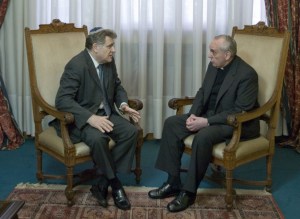 But is this some random statement from the Pope, off the cuff and without notes? Actually no, this is precisely what he believes. In 2010, a dialogue was published between then Cardinal Bergolio and Jewish Rabbi Abraham Skorka, titled On heaven and earth, on a wide range of issues. In that, Francis said the following [My emphasis in bold]:
“When I speak with atheists, I will sometimes discuss social concerns, but I do not propose the problem of God as a starting point, except in the case that they propose it to me. If this occurs, I tell them why I believe. But that which is human is so rich to share and to work at that very easily we can mutually complement our richness. As I am a believer, I know that these riches are a gift from God. I also know that the other person, the atheist, does not know that. I do not approach the relationship in order to proselytize, or convert the atheist; [!] I respect him and I show myself as I am… I do not have any type of reluctance, nor would I say that his life is condemned, because I am convinced that I do not have the right to make a judgment about the honesty of that person; even less, if he shows me those human virtues that exalt others and do me good.” (Pgs. 12-13).
Hence the Scalfari interviews. The curious thing about those, of course, is the Vatican Press office is more or less claiming that Scalfari is changing the Pope’s words, yet the Pope goes to Scalfari again and the Vatican website still promotes the interview. But the Pope’s words are being changed.
More problematic is the unqualified way he speaks of these things. It strikes your feelings, yeah we want to treat people with respect, which then eviscerates truth from your dealings. It is one thing to respect the people in your society, and treat them courteously. It is another, to be entirely unconcerned with their eternal salvation, as though God blesses unbelief. What is the Vatican II mantra, always going back to Scripture? That is largely just a vehicle to discard the Tradition. Congar’s argument is that all Tradition is contained in Scripture, so therefore Scripture has the sufficiency and the Tradition is at best an appendage which we don’t need to worry about, because its all in Scripture. It is also a good argument for discarding the Tradition, once one has judged that it is not in Scripture. But then Scripture itself is cast aside when it doesn’t fit in with the Vatican II meta-narrative, or the religion of feelings and good intentions. What does it say in Scripture?
“Si autem tu annuntiaveris impio, et ille non fuerit conversus ab impietate sua, et a via sua impia, ipse quidem in iniquitate sua morietur: tu autem animam tuam liberasti.
Sed et si conversus justus a justitia sua fuerit, et fecerit iniquitatem, ponam offendiculum coram eo: ipse morietur quia non annuntiasti ei: in peccato suo morietur, et non erunt in memoria justitiae ejus quas fecit, sanguinem vero ejus de manu tua requiram.”
If, however, you will have declared to the impious, and he will not have converted from his iniquity, and his impious life, truly he will die in his iniquity, and you however acquitted your soul.
But even if the just man will have been turned from justice, and committed evil, I will place a stumbling block in his presence, he will die because you will not have preached unto him, and he will die in his sin, and the just things which he did will be forgotten, but I will require his blood at your hand. EzechielIII: 19-20 (All translations from the Vulgate are mine)
Or Again:
Et accedens Jesus locutus est eis, dicens: Data est mihi omnis potestas in caelo et in terra:
Euntes ergo docete omnes gentes: baptizantes eos in nomine Patris, et Filii, et Spiritus Sancti:
Docentes eos servare omnia quaecumque mandavi vobis: et ecce ego vobiscum sum omnibus diebus, usque ad consummationem saeculi.
And coming, Jesus spoke to them, saying: “All power in heaven and earth has been given to me; going therefore, teach all nations; baptizing them in the name of the Father, and of the Son, and of the Holy Ghost; Teaching them to keep all things whichever I commanded you, and behold, I am with you all days, even to the end of the age.”
Matthew XXVIII: 18-20(My emphasis)
Or again:
Et dixit eis: Euntes in mundum universum praedicate Evangelium omni creaturae.
Qui crediderit, et baptizatus fuerit, salvus erit: qui vero non crediderit, condemnabitur.
And he said to them: Going into the whole world, preach the Gospel to every creature. Whoever will have believed and been baptized, he will be saved, but whoever will not have believed, he will be condemned.
Mark XVI: 16 (My emphasis)
These scriptural references should be clear, even if you are using a “Good News Bible” or whatever edition you can pick up at Barnes and Noble. Even absent the Tradition, where copious resources could be produced from every Church Father, and every Scholastic, every theologian, and every Doctor of the Church on the necessity for membership in the Church, the necessity of Faith for salvation and so many other doctrines implicitly defied by the Pope’s behavior toward atheists, the scripture clearly shows his behavior is contrary to Christ’s commands. So the Pope, is saying he is not at all concerned that the Atheist doesn’t believe, in spite of Our Lord’s very clear and grave words. Now obviously there is prudence, and many times I’ve been at that point, where you know if you push any harder you’ll lose the person, but you did try, and resort to prayer where argument fails. Francis wasn’t even talking about that, he’s talking about shirking the whole question altogether. “Who am I to judge?” Unfortunately there is the dread verse in Ezechiel: “I will require his blood at your hand.” It get’s even worse:
“God makes Himself felt in the heart of each person. He also respects the culture of all people. Each nation picks up that vision of God and translates it in accordance with the culture, and elaborates, purifies and gives it a system. Some cultures are primitive in their explanations, but God is open to all people. He calls everyone. He moves everyone to seek Him and to discover Him through creation. In our case, that of Judaism and Christianity, we have a personal revelation. God Himself encounters us; He reveals Himself to us, He shows us the way and He accompanies us; He tells us His name, He guides us through the prophets. Christians believe, ultimately, that He manifested Himself to us and gave Himself to us through Jesus Christ. Moreover, throughout history, there have existed circumstances that created schisms and constructed diverse communities that have different ways of living Christianity, like the Reformation. We lived through a thirty year war and it shaped different faiths. It is very hard to accept and it was a disgraceful time, but that is the reality. God is patient, He waits, and God does not kill. It is man that wants to do so on God’s behalf. To kill in the name of God is blasphemy.” (On heaven and earth, pg. 19; my emphasis.)
Well, where do I start? This simply cannot be read as anything but modernism. For instance, it is one thing to say God uses all cultures to reveal his glory. This is true, and when Catholic missionaries brought the faith, for example, to Native Americans, or into the far East, they preserved the local populations’ culture and tradition, which worked in harmony with the Traditional Latin Mass that they also established. When, however, he says: “each nation picks up that vision of God and translates it in accordance with their culture”, this is, or at least appears to be, rooted in the modernist opinion that all religions are essentially different visions of God, and we’re all fellow travelers and that sort of nonsense. Yet, that pesky Bible again, says: “Quoniam omnes dii gentium daemonia; Dominus autem caelos fecit.” For all the gods of the nations are demons, but the Lord made the heavens. -Psalm 95 (96): 5.
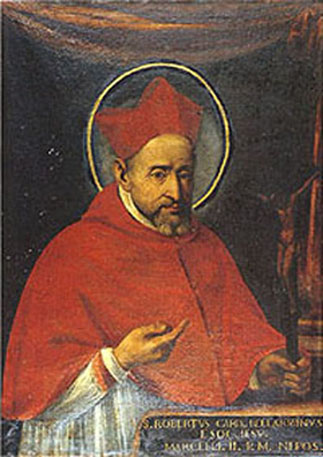
Where we circle to the relevance with respect to the Pope’s statement to the Protestant ministers, is in the latter part of this quote. It really expresses the metaphysics of Francis’ philosophy of religion. “diverse communities that have different ways of living Christianity.” Well, what are we to make of this? In proper Catholic ecclesiology, there is no way of living Christianity, except by being Catholic, in the Latin right, or in one of the Eastern rites. There is only one Church, as is clear in the scriptures. To say that other communities have another way of living Christianity, is to hold that there is an anomalous Christianity, that can be done entirely differently by different groups, who only agree on essentials. What the Church has historically called the essentials is, well, a bit different from that. It might have benefitted the then Cardinal Bergolio to examine what his fellow Jesuit, St. Robert Bellarmine, doctor of the Church had said on that subject:
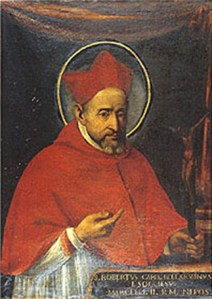 “There is only one Church, not two, that body, both one and true is of men of the same Christian faith with respect to profession, and gathered in the communion of the same sacraments, under the rule of the legitimate shepherds, and especially of the one vicar of Christ on earth, the Roman Pontiff. It can easily be collected from such a definition, which men pertain to the Church, and those who doe not pertain to her. There are three parts of this definition. The Profession of the true faith, the communion of the sacraments, and the subjection to the legitimate pastor, the Roman Pontiff. By reason of the first part all unbelievers are excluded, as well as those who never were in the Church, such as Jews, Turks and Pagans; and also those who were in and left, as heretics and apostates. By reason of the second, catechumens and the excommunicate are excluded, because these are not admitted to the communion of the sacraments, as these are dismissed. By reason of the third, schismatics are excluded, who have both the faith and the sacraments, but are not subjected to the legitimate pastor, and therefore profess the faith and carry out the sacraments on the outside. All others however are included, even those who might be reprobate, criminal or impious.”1 (De Ecclesia Militante, bk III ch. 2, my emphasis)
Similar statements could be collected from every Theologian until the 1960’s. But no, this was not the religion of Cardinal Bergolio, and it would appear his doctrine has not changed.
Throughout this interview, Francis confesses he is “naive”. This is certainly clear with his historical analysis of the Thirty Years War. This war, from 1618-1648, is often described in popular history as a war between Catholics and Protestants in Germany. This is false, like other pop-history dates, such as assigning 1054 as the date of the Great schism between East and West, even though the Eastern Churches were all reconciled in 1099, and remained so until 1204, and came in and out of union until the 1300’s when the politics in the West caused various worldly Popes from continuing the effort of full reunion. Either way, the Thirty Years war saw Catholics and Protestants fighting on both sides of the conflict. When it broke out, it was when the Elector of the Palatinate, Frederick, was invited by the Bohemians (Czechs) who had revolted from the Emperor to become their king. This occurred after the famous “De-fenestration of Prague”. So, Frederick came, and became king, but was put under the Reichs’ ban, which essentially a deposition, that declared all his subjects freed from obedience to him, and made him an outlaw within the Holy Roman Empire. Frederick expected all the Protestant lords and elector’s to come to his aid, but instead they sided with the Emperor, mostly because they wanted to grab some of his land. He also alienated his subjects by his strict Calvinism, which the Lutherans and Hussites did not accept. Later the conflict widened, with Catholics and Protestants on the emperor’s side, and Protestants on the other side. Then the French entered the conflict, and what’s more, induced Gustavus Adolphus, the Swedish king, to enter the war on the Protestant side. The French, though Catholic, assisted the Protestants in every way, just as they assisted the Lutherans in 1548 against Charles V, so now they assisted the Dutch against the Spanish, fought the Spanish, and sent troops to fight for Adolphus. Although my expertise in this conflict is more on the military side than the political side, it should be clear to anyone who studies it, that while religious considerations were important, politics and military glory were equally apart of this conflict. The security of states, the prominence of royal houses, these were all considerations at work in this conflict. It was not so much killing in the name of God, but in the name of kings, for worldly glory, and power.
The result, was an agreement for toleration in order to avoid more conflict, and was fully in accord with Catholic principles. It was devastating, it was a scandal, but it did not create “new religions”, or “new ways of being Christian”, it solidified those who had left the Church politically.
Ultimately, then, when the Pope told those Protestants that he didn’t want to convert them, and later, apologized to Pentecostals for the Church preventing their growth, this is not some off the cuff comment that he later regrets to make them feel good, this is really what he believes!
The conclusion, then, is that whenever Francis speaks, it is probably best to run to older works of theology approved by the Church at that time, or to read the Fathers of the Church. Pray, but don’t become despondent over it. Francis cannot change what the Church formally teaches, it isn’t possible. God will judge him, as He promised to judge Ezechiel, and it is our job to pray and refer back to the Church’s perennial teaching as the antidote to all the nonsense.
1 “Ecclesiam unam tantum esse, non duas, et illam unam et veram esse coetum hominum ejusdem christianae fidei professione et eorundem sacramentorum communione colligatum, sub regimine legitimorum pastorum, ac praecipue unius Christi in terris vicarii romani pontificis. Ex qua definitione facile colligi potest, qui homines ad Ecclesiam pertineant, qui vero ad eam non pertineant. Tres enim sunt partes hujus definitionis. Professio verae fidei, sacramentorum communio, et subjectio ad legitimum pastorem romanum pontificem. Ratione primae partis excluduntur omnes infideles tam qui numquam fuerunt in Ecclesia, ut Judaei, Turcae, Pagani; tam qui fuerunt et recesserunt, ut haeretici et apostatae. Ratione secundae, excluduntur catechumeni et excommunicati, quoniam illi non sunt admissi ad sacramentorum communionem, isti sunt dimissi. Ratione tertiae, excluduntur schismatici, qui habent fidem et sacramenta, sed non subduntur legitimo pastori, et ideo foris profitentur fidem, et sacramenta percipiunt. Includuntur autem omnes alii, etiamsi reprobro, scelesti et impii sint.”
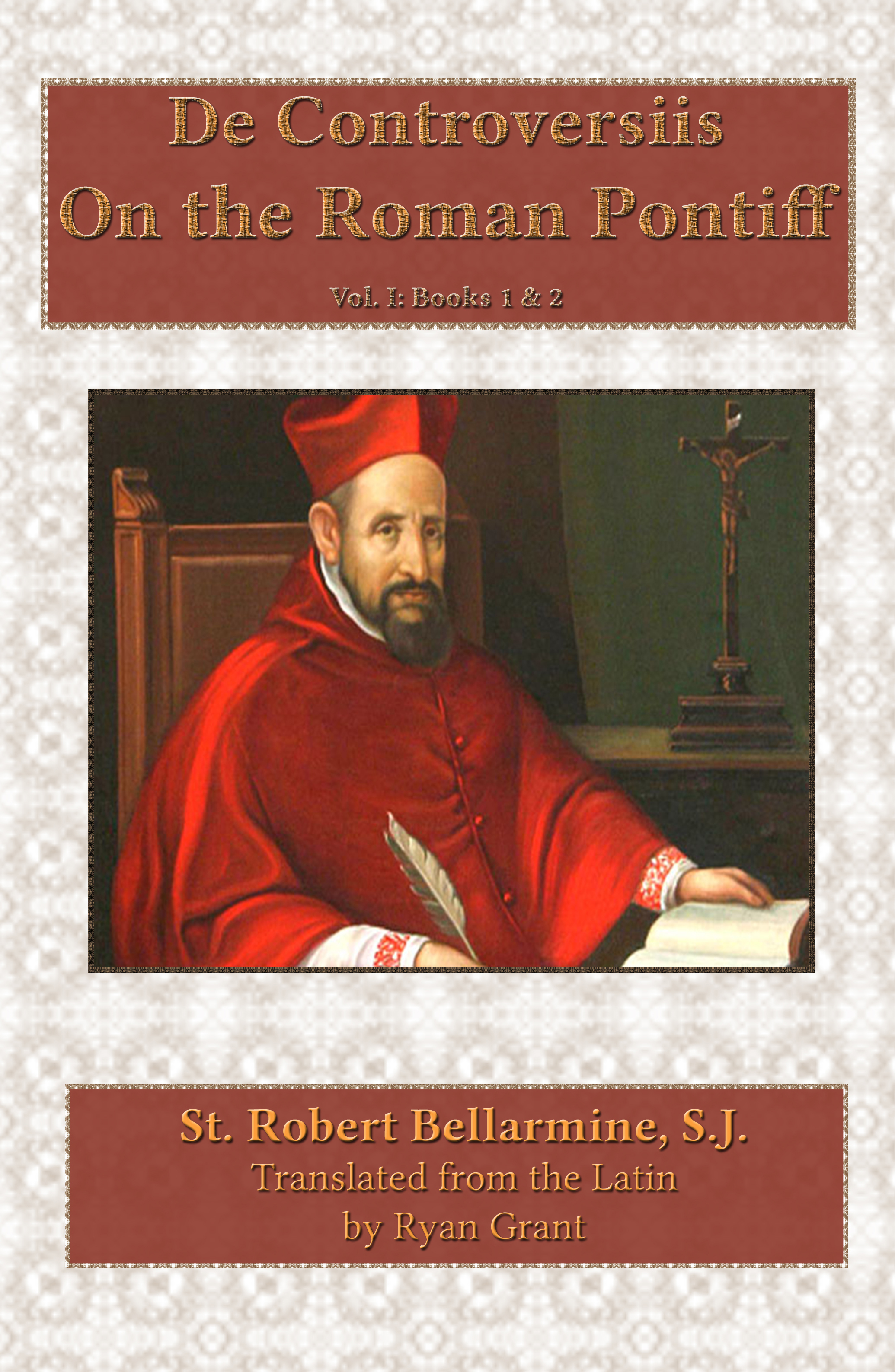 I am preparing to publish volume 1 of my translation of De Romano Pontifice, which will embrace books 1 and 2, very soon. The editing has taken a little longer than I thought it would, though it has helped me to catch up on finishing books 3 and 4 and hopefully starting on 5 (the shortest one) for release as volume 2.
 Today we welcome Rick Delano, the Producer of the movie: The Principle, to talk about issues relating to the same movie as well as the subject of Geo-centrism, and other topics relating to the movie, which I highly recommend irrespective of your views on the matter.





 Athanasius Contra Mundum