Originally published on the original Athanasius Contra Mundum, 10 October 2010.
Epigonius, Bishop of the Royal Region of Bullas, declares “With the rule concerning continence and chastity [which] was already discussed in a previous council, let the same be taught with more emphasis. Namely that there are the three ranks that by virtue of their consecration, are under the same obligation of chastity, i.e. the bishop, the priest, and the deacon, and let them be instructed to keep their purity.
Bishop Genethlius declares: As was previously said, it is fitting that the holy bishops and priests of God as well as the deacons, those who are in the service of the divine sacraments, observe perfect continence, so that they may obtain in all simplicity what they are asking from God; what the apostles taught and what antiquity itself observed, let us also also keep. 1
-Council of Carthage
In the midst of the clerical abuse scandal, one finds increasingly the call for an end to clerical celibacy. According to those claiming that celibacy should be optional, they argue that it is unnatural to be celibate and the requirement is too hard and that’s why we have the problem. Or, that celibacy psychologically unbalances the priest, and that is why he cannot keep away from young boys or women.
Of course we know at a purely natural level, these arguments are false since the percentage of those who molest children are as high (though under-reported) in religions where the clergy are married, and double or triple in education, law, medicine and social work, places where people can get married and there is no requirement which could psychologically unbalance them with respect to marriage. Now in law there are things which would psychologically unbalance anyone, but that is for another day. Thus it is not the mere fact that priests are as a class unmarried.
That however only illuminates what is not the problem. It tells us nothing of its source or its solution. There is something which you will find in common with teachers, lawyers and doctors who molest children and priests, namely it is an unmortified body, or more particularly addiction to sexual sin. The people who commit heinous acts like this are not suffering from a lack of sex, but from too much involvement in it!
There is a false belief today, that once you are married you can have at it and it is perfectly fine. Of course it is true that once married acts ordered toward the procreation of children, which are conducted with due regard for the end (i.e. no heterosexual sodomy) are good, but the failure to commit adultery does not constitute the virtue of chastity. Chastity is rather an interior virtue that mortifies your interior desires and frees one from the attachment to sexual pleasure. It doesn’t mean it is bad, but it means you are not attached to it, as should be the case with other things. The reason for this should be understood by any man who gets married, the desires don’t stop for other women just because you are now lawfully able to engage with one. Neither do attractions, affections, or the potential to be caught in pornography and self abuse. This is because the concupiscible appetite (that part of us that desires food and sexual relations) continues to move the will in that direction, until we have brought that part of us into line by mortification and detachment. When one does not engage in any sexual activity that is called continence, not chastity. Even spouses are required to remain chaste. Chastity simply has a different meaning for them because of their state in life.
Due to the fall, our concupiscible appetites are out of control. As Chesterton said, after the fall we are like a man who jumps on a horse and runs in all directions. Concupiscence, the inclination of our body toward sin, dwells objectively in the body. Grace may remedy it over time, if we are faithful, but it is not automatic. This is the principle error of Mr. West’s Theology of the Body, it gives one the idea that grace will conquer nature through the act of license with one’s spouse and constantly focusing on sexuality, in reality it is the opposite, we conquer concupiscence in this area by focusing on this only when it is proper and suitable. It does not mean you must live a Josephite marriage, but that you must be detached from the goods of marriage. The secondary end of marriage in the old manuals and catechisms was called “The Remedy for concupiscence”, and this did not refer simply to being able to engage in relations, because by itself that does not solve the problem. Rather, it refers to the whole course of married life which serves to mortify the senses of the spouses and move them toward holiness. A man in a state of matrimony is just as capable, if not more so, of committing heinous and evil sins against the 6th and 9th commandment. Now that you are allowed to consider your spouse under this aspect, it becomes tempting to judge someone who is not your spouse by this aspect. If the man is disordered, then this becomes a real problem. That the majority of sex abusers in history have been male should also serve to tell us something.
Now if we look to the clergy abuse crisis, let us also apply this. They say that the priest who has been chaste will not struggle in this area, because he does not have material in his imagination to fuel the flames, that is the fomes peccati. If he fails in this regard, he is going to have problems. If he has already come in with disorders, such as homosexuality or pedophilia, he is going to tend toward disordered behavior even if it never manifests itself. Due to the breakdown in the piety of the faithful prior to Vatican II and the lowering of standards even before the Council, plenty of unhealthy men entered the seminary. They were unhealthy for more than one reason, it is not just the abusers, but those who married their housekeepers and asked to be returned to the lay state (as in the case of one particular ex-priest I knew). The problem that caused the clerical abuse scandal, as well as all the scandals in this regard within and outside the Church, is too much sex, rather than not enough.
Rather, celibacy and clerical chastity are the crowning virtues of a priest by which he is conformed in body as well as the mark of ordination to Jesus Christ, who was perfectly chaste in this life. This is why the western discipline is superior to that of the other Churches, it more perfectly conforms the priest to Jesus Christ than a man who is married but abstains for a period before the liturgy. It can also be looked at in this way, the priest of the old testament is a type of the priest in the New Testament, and the fulfillment of biblical types is superior to what is in the old. In the old testament, the priest would be selected in a certain year to offer sacrifice in the temple, and a year prior to that he had to live apart from his wife. This is so he will be set apart to take part in the things of God. If that is true in the old law, how much more so in the new where the priest offers sacrifice every day (though in some traditions every week), that he should be continually set apart? In the Early Church, while converts who were married were ordained, the general witness is that they had to leave their wives and make a vow of continence. (a more complete treatment of the subject than can be produced here can be seen in The Apostolic Origins of Priestly Celibacy, by Cochini).
Many Patristic writers note that the one Apostle who was held in higher esteem than the others was John. Peter is higher than John because of his office, but John is held higher by his purity of life. The Fathers particularly saw a close relationship between Jesus and John based on his virginity:
St. Jerome declares:
“Yet John, one of the disciples who was said to be the youngest among the apostles, and whose faith in Christ started when he was a virgin, remained a virgin, and this is the reason that he was preferred by the Lord and leaned on Jesus’ breast.” (Adversus Jovinianum, PL23, 246b-c)
St. Augustine tells us:
“Among the commentators of the Holy word, several-and those were not men whose opinions we can hold in contempt-think that if Christ loved the Apostle John with a special love, it was because he had never been married and that from his earliest childhood he practiced the most delicate purity. There are no conclusive proofs in canonical Scripture; nevertheless, what seems to support such a feeling and demonstrate its aptness is that John was a figure of the heavenly life, during which no wedding would be celebrated.” (Tractatus in Evangelium Joannis, 124, 7
St. Paulinus of Nola
“Among his disciples he chose the youngest one so as to entrust his mother, as was fit to a virgin apostle.” (PL 61, 416a)
Proclus of Constantinople
The Apostle John received the principle and most eminent gift from God, virginity. And this is why the two sons of Zebedee were called ‘sons of thunder’. (PG 65, 730b, quoted in Patrology, study of the Greek Fathers)
Lastly, chastity is called by scholastic theologians the crown of all virtues, because without it you cannot attain to clarity in this life. Even the demons who tempt men to impurity are ashamed, because they remember how beautiful their natures were and themselves cannot stand the affront to them by tempting men to such low sins. Chastity orders the other virtues to a clarity devoid of carnal affections and it is easier to attain in one who is not married than one who is. This does not mean of course that everyone who is celibate is chaste, we have the obvious example of the 15th century, pre-Revolution France or of the last 40 years, and other periods where the lack of morals of the clergy are notable. One time St. Augustine appeared with St. Thomas, I believe it was to John of St. Thomas but I’m not sure (if someone who knows can enlighten me I’d appreciate it) to give a testimony to the importance of St. Thomas’ works, and he said that they were equal in glory except that in the splendour of virginity, St. Thomas was the greater.
In a certain sense, it is true that a certain aspect of celibacy is not a doctrine, that it is something that can be modified by the Church. This however does not mean that the Church ought to, or even can get rid of a discipline simply because the world or other elements think it should. St. Basil, witnesses for us that
Among the “doctrines” and the definitions kept in the Church, we have received some from the written teaching and we have obtained the other ones, secretly transmitted, from the apostolic Tradition. They all have the same validity with regard to piety as no one would doubt if he has any experience of ecclesiastical institutions; because if we attempt to do away with unwritten customs, by claiming that they have no great validity, we would unknowingly hurt the Gospel on its very essential points. (On the Holy Spirit)
Just because it can be changed doesn’t mean that it should, as Traditionalists well know. Who now are the agents of change? The world. Everyone in society thinks that the only ones who need to get married are priests. Yet, the stuck on stupid generation as I have termed it, will pass away and what then? As we see from the quotes from the Council of Carthage which head this post, the Early Church ordained married men but required of them perfect continence. It was a time when most who came to the faith were converts, or not all who came to the priesthood were unmarried and it was necessary for some years to ordain married men. Yet the early Church maintained celibacy. The Church has always insisted on it, as a means for chastity. Not the sole means of course, because by itself it is insufficient, but as the state in life combined with interior chastity in the soul to lead the priest to true clarity and true conformity with Jesus Christ. The end to the sex scandal is two things then, the double crown of charity and chastity. Chastity as has been said above, is necessary to attain to any vision in this life. Charity however, is among the faithful, and the priest who will love God above all the things in this world. Why among the faithful, that is the laity? Their prayers and mortification will lead to holy priests. There is a quote from St. John Eudes, though I’m still tracking down the source, which says “There is no surer sign that God is displeased with His people than to send them unholy priests.” Well, with the sacrilegious communions, rampant heresy, apostasy, moral failings and hypocrisy, is it no surprise? Or as the ancient maxim goes, we get the leaders we deserve. We need charity to offer to God fitting sacrifices for worthy priests. We need celibacy, to keep the priests separate from the things of this world so they can be holy priests. We do not need more priests, we need more holy priests especially in this time. Ending celibacy does not make one move toward that goal, in fact given our culture, it will move us further away from this goal. What is needed is for the Church to stay true to her age old traditions.
1: Epigonius episcopus Bullensium Regionum dixit: Cum praeterito concilio de continentia et castiate tractaretur, gradus isti treas qui constrictione quadam castitatis per consecrationem annexi sunt, episcopus inquam, presbyter et diaconus, tractatu pleniori, ut pudicitiam custodiant, doceantur. Genethilius episcopus dixit: Ut superius dictum est, decet sacros antistes ac Dei sacerdotes nec non et levitas vel qui sacramentis divinis inserviunt, continentes esse in omnibus, quo possint simpliciter quod a Domino postulant impetrare, ut quod apostoli docuerunt et ipsa servavit antiquitas, nos quoque custodiamus.
The Raising of Christ on the Cross – Peter Paul Rubens
Rubens is perhaps one of the greatest artists of all time. We spoke a little bit of Rubens before in my book review of Master of Shadows: the Secret diplomatic life of Peter Paul Rubens. Rubens is one of the greatest genre painters, because of his Catholicism, his stoicism and sense of order, his love of the classics, and his diligence and hard work. Today I want to look at one of his best early works, which took his budding fame and made it immortal. Michaelangelo Buonarotti reckoned that Flemish artists were good for nothing but landscapes, which was not strictly true, particularly if we consider Van Eycke or Jos van Cleve, or even Bosch, but it is Rubens who will put to rest this bias forever. Continue reading →
Today on the Aude Sapere podcast, we will take a look at the author of the “homosexual passages” of the Synod’s mid-term report which have predictably rocked the headlines around the world. Continue reading →
There is a fascinating development last week in the ever unfolding saga of the Society of St. Pius X. Firstly, however, in the name of full disclosure, I need to point out that I worked in a Society school for 4 years, and I am well disposed towards them, albeit I do not agree with all of their positions. So whether you love the SSPX or hate them, at least appreciate the value of their position in the continuing crisis in the Church. People of good faith can disagree about them, and I do not agree with all of their theological positions, but that is another matter.
Now, we are often told that the SSPX is schismatic, disobedient, that they are not in communion, and one priest even argued they are worse than the satanists who offered a black mass in Oklahoma City [!]. I really wish I was making the last one up, but, alas. It is one of those curious things, even if we were to grant that the SSPX priests commit a sin when they say Mass (which I don’t), we need to ask how is a sin which the priest incurs personally, worse than the sacrilegious action that desecrates the host to offer it to the devil and curse everyone publicly? There is simply no comparison. Obviously, the Vatican does not see it that way, or else they would not have invited Fellay for another round of talks. It has long been patently obvious that the Holy See does not consider the Society “schismatic”, but merely disobedient, which in the post-Vatican II world, is nothing new.
Nevertheless, this interesting detail came out of Rome last week. Bishop Fellay met with Cardinal Müller, the prefect of the Congregation on Doctrine and the Faith, and moreover, with several other prelates. That a meeting happened doesn’t surprise me, but what was said on Rome’s side was quite surprising. The Communque from the Vatican Press Office said: “The SSPX are in a state of imperfect reconciliation.” The language has shifted from 2011. Then it was imperfect communion. Now its imperfect reconciliation, which implies they are in full communion (though in fairness the Vatican press release did not say that). I’m not sure what “imperfect reconciliation” is meant to mean exactly, though seemingly it would suggest a lack of formal faculties. On the, frankly, amazing website Rorate Caeli, there is an article where a French commentator opined:
“The canonical recognition of the SSPX, in case it took place in the times ahead, would not have anymore the appearance and interest of an earthquake that it would have had within the Church at the end of the Benedict XVI pontificate. On the other hand, it has paradoxically become much easier to accomplish, from the moment the current pope – it’s the least we can say – does not have the reputation of traditionalism that his predecessor did.” (Source).
It is a fascinating irony, that Francis, being more progressive to say the least, might be better able to reconcile the Society than Benedict was. It has also been suggested that Müller is trying to find common cause with his erstwhile opponents and seek aid in the clear division with Cardinal Kasper on marriage questions. It is amusing, that when Müller was chosen to be the new prefect of the CDF, there was widespread outcry amongst Trads and conservatives that he was a big liberal, that he had denied our Lady’s perpetual Virginity, and that he was another Tubingen modernist. Now, however, Francis has shifted the paradigm so far to the left, that Muller is the new conservative. The irony. Is Müller looking for friends amongst the SSPX? Is Francis more likely to reconcile the Society than Benedict? It is an interesting argument, but I find it lacking in a number of areas.
The last round of SSPX-Rome talks occurred while I was out of the Catholic internet world. I will say now what I would have said then: I’ll believe it when I see it. In the year 2000, being largely new to the Traditional movement and unaware of a lot of the wider history, there was talk of an SSPX reconciliation by Easter. The SSPX superiors were buzzing about it (particularly Fr. Schmidberger), insiders in Rome were talking about it, then it fell apart, entirely on Rome’s side. Then it was talked about heavily under Benedict’s reign, in 2006, 2009, and fatefully 2011. This last time was not just on Rome’s side, though there were clear machinations in that direction, rather on the Society’s side it provoked a small breakaway group which still operates today. Apart from those particular dates, there was constant buzzing on the subject about the SSPX making an agreement with Rome. It never came to pass.
Frankly, I do not believe it will come to pass under Francis either, for many reasons. Firstly, although Francis has left Summorum Pontificum largely intact (except for the FIs), he is obviously opposed to the restoration of traditionalism. When I was in Rome recently a priest told me that Francis was leaving Traditionalism alone because he feared giving a new impetus to it by attacking it outright. Whatever the truth of that, he has attacked traditional spirituality as “Pelagian”, “backward”, and a number of other things that I find personally offensive. If, in fact, I were to say that those who attend the Novus Ordo were “Pelagian” or modernist, or whatever demeaning name for their particular spirituality, there would be a chorus (of the handful who actually read me!) decrying the judgmentalism and arrogance of such a thing. We might say to Pope Francis “Who are you to judge”, but as we know that is a one way street. Not only will Francis not be very keen on “reconciling” a group he considers to be Pelagian, for the crime of offering a spiritual gift of rosaries, but even more, he would find serious opposition from his friends and advisers.
Moreover, Müller has been strongly opposed to the Society in the past, and there is no evidence that he has shifted his position. In fact, as Fellay noted in an interview following the meeting, “There is nothing new, in the sense that both our interlocutors and ourselves, we realize that doctrinal differences still exist—which had been made quite clear during the theological discussions in 2009-2011—and that because of this we were unable to sign the Doctrinal Preamble that the Congregation for the Doctrine of the Faith has proposed to us since 2011.” (Source) So, really nothing has changed. Like in past meetings, they still want to ring from the Society a positive confirmation of Vatican II, which is not going to happen. Even if Fellay were inclined to do so (I don’t think he really is) the Society would fall apart.
This brings us to our next point. A serious discussion of “fully reconciling” with Rome provoked such an outcry in the Society in 2011, that several priests broke away and tried to form their own “traditional SSPX”, or “resistance” or whatever they call it. Generally it goes by the latter name. They did this before Fellay actually signed anything, and before there was any real talk about accepting the doctrinal preamble. In some countries there was a very marked anger toward it, such as in France, but also in Asia. The resistance is interesting, having left their local SSPX churches, they meet in basements and community centers, and celebrate the exact same 1962 Missal that is celebrated in SSPX Churches (alas! if only they’d go back to the ’44), the preaching is more or less the same, there is no discernible difference from the SSPX. The Society didn’t even sign anything! There were rumors in that process that the main movers of the resistance in this country, Fr. Pfeiffer, would start a new society with Bishop Williamson as its head. The problem there, of course, was most did not know that Fr. Pfeiffer and Bishop Williamson do not get along. And I predicted that Williamson would just go to quiet retirement, which at the present he has done. Whether the resistance will fizzle out or not I don’t know, but a new round of discussions over the doctrinal preamble will open up the old wounds, and Fellay knows, better than anyone I think, that such a move would threaten the unity of the Society. That is largely the reasoning behind his clear statement that “we cannot sign”. So in the end it will not happen, at least under present conditions.
Don’t believe the media hype if anything should be suggested. We just need to pray that in God’s time, this all gets sorted out.
Correction: Above I had originally said: “The Holy See Press Office said the SSPX are in full communion but imperfect reconciliation.” That was the gloss from a priest in one of my sources, it was not what the Holy See Press office had in fact said. I corrected the paragraph above to reflect this.
St. Francis meditating on death. -Michaelangelo Merisi da Caravaggio
St. Francis is perhaps the universal saint of the universal Church. All of the circumstances of his life were directed, by divine providence, to conform completely to the life of our Savior. Here, I’m providing an excerpt from a book I reprinted, The Life of St. Francis of Assisi, by Candide Chalippe, OFM. It is a truly amazing book, and I can’t recommend it enough. I have also kept the price low so that more people can take advantage of it, while maintaining readability with an excellent layout and beautiful art (not to mention retention of the footnotes, which another edition dropped since many of them attack “the heretics” (usually meaning at that time Protestants, and it was deemed to not be ecumenical).
Count Orlando had a church built in Mount Alvernia, according to the plan which the Saint had given him, which, it was confidently said, had been given to him by the Blessed Virgin, who appeared accompanied by St. John Baptist, and St. John the Evangelist.
While they were at work at his building and at the cells for the brethren, Francis explored the mountain on all its sides, to discover the sites best adapted for contemplation. He found one, where there were some large openings in the rock, great masses overhanging them, deep caverns, and frightful pits; and what seemed to him to be most curious, there was a rock so split that the interior formed a room with a smooth flooring, and a sort of ceiling which had a small opening which admitted the light. He was anxious to know whether this was the natural formation of the rock, or whether it was not the effect of an earthquake; and, after having recited the seven penitential Psalms, he begged God to grant him information on this head. An angel acquainted him, in an apparition, that this had happened at the death of Jesus Christ, when the earth shook and the rocks were rent asunder. This circumstance gave Mount Alvernia additional value in the eyes of the servant of Jesus Christ crucified. He never afterwards saw these openings without thinking of the sufferings his Divine Master endured on the cross,1 and without wishing that his feelings of compassion might break his heart. In the opinion of the holy Fathers, the rocks which were rent when Jesus Christ expired were reproaches to the Jews for the hardness of their hearts, and this reproach falls equally on Christians who are insensible to His sufferings.2
We can have no difficulty in thinking, with Cardinal Baronius, that the rocks on Mount Alvernia were split at the death of our Saviour, since the earthquake was universal, according to the opinions of Eusebius, St. Jerome, and many others, and even according to the testimony of pagan authors.
It is also very credible that the Son of God has manifested to His special servants, some of the effects of this motion of the earth, in order to impress more vividly on their minds the remembrance of His passion: and may we not think that the Lord, who is the beholder of all ages,3 as the wise man says, and who had selected Mount Alvernia as the place in which He would do His servant Francis the favor of imprinting the stigmata on him, as we shall see further on, was pleased to give this mountain some resemblance to that of Calvary, where St. Cyril of Jerusalem assures us, that in his time the rents caused by the earthquake were seen?
Among the masses of rock on Mount Alvernia, there is one much more elevated and much larger than the rest, and which is separated from them by precipices, to which there is no access but by throwing a bridge across. There, as in an insulated citadel, a celebrated brigand had his stronghold, who was called the Wolf; on account of the plunder and murders he committed in the surrounding country, either by himself, or by the gang of which he was the chief. He often, also, by means of a flying bridge, confined travelers in this place, whom he had surprised on the high-roads, and whom he detained till their ransom was paid. The establishment of Francis and his brethren displeased him greatly: people of that sort do not like having neighbors. He gave them several times notice to begone, and he threatened them should they not obey. Their great poverty gave them nothing to fear from thieves, but there was just cause for apprehending that the murderer might massacre them all. Divine Providence, however, saved them by a change which might well be called the word of the Most High. The villain came one day determined upon expelling them, and used the most atrocious language to them. Francis received him with so much mildness, listened to him with so much patience, and induced him by degrees to hear reason, so that his anger entirely fell, and he not only consented to their remaining, but he begged that they would admit him into their poor dwelling. He witnessed during several days their angelic mode of life, and he became so changed, that he determined upon adopting a similar plan. The Saint perceiving that from a ravenous wolf he was become a gentle lamb, gave him the habit of the Order, and the name of Brother Agnello, under which he expiated his crimes by religious penance, of which he rigidly fulfilled all the duties. This fact was of such notoriety, that the rock to which he used to retire has always been called since, and is still known, by the name of Brother Wolf’s prison.
“And the church more or less shrugs and say, “Look, we don’t take our agenda from the polls. We don’t take our agenda from what the world is saying. Our agenda is given to us by the God who made us, and we must be faithful to him instead of what we’re– what we’re hearing’ from the world.””
-Cardinal Timothy Dolan (source)
Michael Voris, you can love him, or you can hate him, and some people do hate him. I would put down good money that the hierarchy does not care for him all that much. Yet recently, he kicked off a bit more of a response from defenders of the bishops’ failed leadership and policies.
For the record, I do not care all that much for Voris’ style. It speaks to some people and is probably good for them, but I don’t have time for bullet points, even when he’s right. I’m a theologian, I look up propositions in the manuals, in St. Thomas, trace their reasoning and source, and apply it to today’s problems. In this case, however, I feel he was right on the money, and his response is something that, frankly, every Catholic should feel. I am talking about Voris’ response to Archbishop Timothy Dolan’s decision to continue supporting and even lead the St. Patrick’s day parade, when that same parade has decided to allow practicing and proud homosexuals to march and display their banners, ostensibly in honor of St. Patrick.
In response to the decision, Dolan noted:
“I have no trouble with the decision at all,” Cardinal Dolan said at an evening news conference announcing his appointment as grand marshal. “I think the decision is a wise one.” (Source)
There are many other things we can note about Dolan, but Voris does it well himself:
Now, Voris uses some strong language, which is rather offensive to the church of NICE. He tells Cardinal Dolan that he is “in the grip of the devil”, and “wicked”. Well, strong as it is, it is not far off the mark. I think myself that it has come time to call out the type of things that are going on the Church for what they are, they are evil.
The big cheese defends the integrity and sacredness of the liturgy. [sic]
Meet Timothy Cardinal Dolan
I recall the first time I became aware of who Cardinal Dolan was during his installation in Milwaukee after that godly loving sodomite, Archbishop Weakland, had produced so much destruction there. Dolan gave his first sermon wearing a cheese head.
Dolan came from the St. Louis diocese, and for a while was in charge of the North American College in Rome, until he was elevated to become the Archbishop of Milwaukee to replace good ol’ Rembert, known for his cathedral wreckovation and squandering hundreds of thousands of dollars of diocesan money to keep old boyfriends quiet. At first Dolan appeared to step into the mold of his predecessor, but then appeared more conservative. I suppose many breathed a sigh of relief that he wasn’t gay. While from all appearances he attempted to help abuse victims while in Milwaukee, and we should not doubt his legitimate charity and concern for them, there are a number of anomalies.
Not to take a story exclusively from the New York Times, I instead am going to what is available of documents that have been released. Interestingly, as the diocese filed for bankruptcy, Dolan at the same time asked for and received permission to move over $57 million dollars to a cemetery trust fund to hide it from victims. Thus in one courtroom they are arguing that they are bankrupt, and in another that they are not. When groups criticized Dolan for this he dismissed it as old falsehoods. Yet, how false was it? The documents proved this was true. Now, to be fair, if we were to put ourselves in Dolan’s shoes, we might look at the situation this way. The diocese has obligations to retiring clergy who did not commit horrible crimes, to charitable works, payment of staff, health insurance, and the legal obligation to maintain cemetaries? We want to protect that don’t we? Why should everyone else suffer on account of these monstrous clergy. Such an argument has its merits, if that is in fact the reasoning, but in light of what went on the demands of justice require it be set aside.
For, if it is a matter of paying diocesan obligations, one could require Weakland to start recuperating the vast sums he spent on his boyfriends, pinch pennies, eliminate waste, the types of things bureaucracies hate doing. It should be simple, indeed, to realize that those who have in fact been abused by priests deserve some kind of compensation, as a modicum of justice. There is one diocese in this country that never had these sorts of problems and that is Lincoln, Nebraska. The reason is, Bishop Flavin, who was extremely progressive btw, heard that two of his priests had abused children. He investigated it, found out it was true, defrocked them and handed them over to the civil authorities. Then he went to the families and said, ‘what can we do to make this right?’ No shuffling priests around, or ignoring victims, or hiding money in trust funds. And… Lincoln Nebraska has never had a sex abuse lawsuit.
While that logic seems ineluctable to us, it is a bit much for a post-Vatican II bishop, as is seen in conservative and liberal bishops alike. There are other irregularities.
Dolan claimed many times that he was not aware of any cash payments for clergy to get them to leave without fighting their laicization. Yet he was present in diocesan meetings when they talked about doing just that. (Source) Again, this is not the MSM attacking the cardinal, maybe some of their spin is, but the documents show he was aware, which is a bit reminiscent of Cardinal Law claiming he knew nothing about the commission set up in the wake of the Rudy Koss scandal, even though he chaired it. Again we have to put ourselves in the bishop’s shoes for a moment. Here is an easy solution, give the priests money up front to get out of town, and we can take care of this faster. After all, we are canonically responsible for providing for these priests. Yet let’s back track, just a bit.
While Canon law requires dioceses to materially support their priests, this does not hold to priests who are under serious penalties, or are in the process of being laicized. Moreover, the bishops have shown themselves quite willing and able to cut off priests whom they suspend for other reasons. While it could be Dolan, or whoever made the decision, thought it was more expedient, it ignores two things: a) Priests who rape children deserve a hefty pyre where they will meet a fiery end to this life, before a fiery beginning to the next, not hush money, b) the perception will be, and in fact is, that they are being given some type of bonus. If it weren’t for the very strange statute of limitations on child rape, they would be transitioning to a jail cell anyway, so the concern should be with making this right however much they can with the victims, not helping priests who are guilty of the most monstrous crimes against children find funding as they “transition to a new life”.
As the Cardinal Archbishop of New York and the most recent president of the USCCB, Dolan is remembered for leading the fight against the HHS mandate and re-iterating the Church’s opposition to civil unions. He has acquired a reputation as a jolly bishop, happily leading the Church along. Curious stains on that particular legacy are that the Archidocese of New York, under his leadership, actually paid for contraception coverage and had complied with state law (under protest), though it was now fighting the same requirement on the national level, and that he had established a homosexual parish, St. Francis Xavier Parish in Manhattan, while he is preparing to close down one of New York’s more beautiful Churches, also being the only one where a daily Traditional Mass can be found, namely Holy Innocents. (Source)
We might also add that as Dolan is leading the fight against Obama, he happily invites him to the Al Smith dinner and allows photos having fun with the most anti-life President in years. He could have done, as Pope Benedict did when Nancy Pelosi, met with him, to forbid photographs to at least avoid the appearance of scandal. Yet he did not.
What all of these things show about Dolan, is that he is a company man. Of course he is more concerned with paying out pedophile priests than victims, or using Obama’s assault on the Church to bolster the Bishops’ “authority” even though his own Archdiocese does the same thing. Like Bernadine, Weakland, Law, Grahmam, and many other of the most disgraceful bishops to ascend to the office, Dolan is a team player, though it must be admitted his crimes are nowhere near the stench of the Bishops named before him. The problem is team USCCB is not always team Jesus, particularly where Catholic moral considerations are concerned.
It is also well known that a significant number of Bishops are gay, or sympathize with active homosexuality, and what is worse a large number of priests are gay. So again, Dolan doesn’t want to rock the boat. At least O’Connor, though he was no paragon of conservative Catholicism, had the backbone to oppose active homosexuals appearing in the St. Patrick’s day parade as a self-identified group. Not so Dolan, the team player, which probably is part of the reason he said “Bravo” to an openly gay football player on Meet the Press (which is linked at the top). Go along with the world even though it is entirely at odds with the Gospel. This is the career that Dolan has displayed, behind the jolly veneer. He is not satan in disguise, he is not malicious (it would appear) or evil, he is a fallible man who is doing wicked things.
The authentic Catholic uprising
Enter Voris, with a stern, serious and loud defense of what a Bishop should be doing. He wasn’t the only one. While Dolan has previously organized the so-called “fortnight for freedom” and other defenses of so-called “religious liberty”, Monsignor Charles Pope, a priest who dared to criticize Dolan was silenced, even though his piece dealt with issues much wider than Cardinal Dolan. So much for religious freedom. Its all fine and good when utilized to make people vote Republican, but as soon as someone in any position of authority takes a second look at our Catholic leaders, it is shut down. Likewise anyone appearing to have any sway. Therefore it is no surprise that the lapdogs of the Bishops should take aim at Voris, who is not a priest, and not employed by a diocese. They managed to shut down Mother Angelica in the 90’s but today the technology has made control impossible.
Now Voris’ comments, while appearing to be a bit histrionic, are what any Catholic 100 years ago would have said about such a spectacle. I think he is exactly right, not because Dolan is having tea with the devil between 4 and 5, but rather, because in his desire to be a company man and please everyone, he has forgotten the role of a Catholic Bishop (especially one in his position as a prince of the Church) and has given scandal. Moreover, he has rejected the same criticism from sources he declares to be charitable.
Thus we should look at the work of one Deacon who particularly took Voris’ appraisal amiss. Deacon Ditewig, PhD, offers the following appraisal:
Where to begin? While reasonable people might certainly disagree with the actions of any bishop, just as one might with any leader, one must certainly stop there, without going on to try to infer motivation or motive. I am sure that if Cardinal Dolan were asked about these things, he would completely and fully reject all of these assertions, and with good reason. To lump together, as Mr. Voris does, sexual orientation and sexual activity is to miss an important distinction made in the teaching of the church. Nowhere has Cardinal Dolan ever sanctioned sinful behavior by anyone, nor does the record indicate that he has ever given anyone a “free pass” on sin of any kind. There is no substantiation of any kind for a claim that the Cardinal has lost his faith, or that he is not striving to provide for the cura animarum of the people of New York — all the people. To spring from a criticism of certain decisions into a full blown attempt to characterize another person’s intentions and motivations — much less that state of that person’s soul — is not only fatally flawed logic, it is seriously deficient in Catholic morality. (Source)
This is a bit shocking, actually, coming from a PhD. Firstly, Voris is not equating the sinful behavior with the orientation. Cardinal Dolan is fully pleased with being the grand marshal of a parade that will now include out and proud practicing homosexuals marching under their own banner, just as he has already approved Masses for the same. At this point we are beyond any question of orientation vs. behavior. Second, while in truth it is not a sin to “be gay”, so to speak, that is to have such an orientation, the said orientation is in fact disordered. That is why we must have compassion and prayer for homosexuals, not persecution. Yet, it doesn’t follow that we must approve of their behavior, particularly when they celebrate their behavior. I don’t think anyone would countenance the association for employers who defraud laborers, or the association of those who abuse orphans and widows celebrating their sins in a parade ostensibly made to honor St. Patrick. Why do we tolerate that for the other sin crying to heaven for vengeance?
What the good deacon here misses, is that the decision to allow out and proud homosexuals to march under their own banner in the parade, constitutes a celebration of their sins, not a mere acknowledgement of the fact that these people suffer under such inclinations. I knew a fellow that was gay in college, and we talked and he knew I wasn’t of the type that would hate him or judge him for having such inclinations. He was a pretty bright guy, but he suffered with it. I prayed with him, I didn’t judge him, as others might have, and he struggled a lot. That is not the type of person who is to be marching in the St. Patrick’s day parade. Rather it will be the type of people who need reproof for their behavior, not the tacit support of the Cardinal Archbishop of the diocese. That is just the problem. By continuing the parade, in all its normal debauchery, with this added, is in fact to give a tacit approval of this behavior. It would be different if it was a chapter of Courage, founded by the late Fr. Harvey, of Catholics, or anyone else, suffering under such an affliction hoping to overcome it. That would constitute not the slightest scandal or offense. Nevertheless, the good deacon continues. [my comments in red]
The last point I wish to highlight is the claim made in the crawler at the bottom of the video. It is an advertisement for a paid subscription to the site, which professes to be “100% faithful to the Magisterium.” I must confess that when I first saw that claim, while watching the video and its assertions about Cardinal Dolan and other “wicked bishops,” I laughed out loud. How a person could claim to be completely faithful to the teaching authority of the Church while at the same time denigrating those men whose ministry includes being authoritative teachers of that Magisterium is simply nonsensical. [Being authoritative teachers like when they approve Gay parishes to have Masses for practicing homosexuals! Even Alexander VI didn’t stoop so low!]
What are we to make of all of this? Let’s review some basics.
The Magisterium is not simply a “who”; it is a “what.” Magisterium refers to the teaching authority of the Church, a Church we believe guided by the Holy Spirit [Not absolutely, but rather protected in solemn definitions in faith and morals. There is nowhere in Catholic doctrine where we teach that the Church is guided in all her doings by the Holy Spirit, or was Pope Alexander VI guided in the banquet of chestnuts but I digress…]. Every person, in some way or another, and in the broadest sense of the term, participates in this teaching authority, constantly learning and sharing this faith. Think of parents, for example, teaching and forming their children in faith, as they are charged at baptism; they are part of the magisterium in this broad sense. [A very broad and non-theological sense! This is one of the biggest stretches I have ever seen, and it entirely confuses the Ecclesia docens with the Ecclesia discens, to the point where the proposition is incorrect…] But in a very specific and particular way, the highest human teachers in the Church are the College of Bishops, always in communion with each other and with the head of the College, the Pope [This particular formulation is problematic, because its ultimate conclusion is erroneous at best if not in fact heretical. He equates the college of Bishops with the Papacy itself, as though the Pope were merely a first among equals. The Pope is the highest human teacher, with or without the Bishops. After his personal office then come the college of Bishops, when they teach on a matter of faith and morals whether together or dispersed throughout the world. This is the great problem with post-Vatican II ecclesiology, it hopelessly pales in comparison to the careful and clear explications of pre-Vatican II tracts De Ecclesia]. Unless and until an authoritative judgment is made by the College (always in communion with the Pope), or by the Pope himself, that a bishop is no longer part of that College, then the bishop in question remains an authoritative teacher. [An authoritative teacher is different than the magisterium, but I’ll go into that later] It is not within the competence of someone else (like Mr. Voris, or myself) to judge when a bishop is no longer teaching authentic or faithful doctrine. [Actually it is, when said Bishop departs from what has always and everywhere been believed by the Church, if it is demonstrable and public]. In fact, I will go further and suggest that, if there should be a presumption of veracity and accuracy in presenting the Church’s teaching, that presumption goes to the bishops, not to anyone else. Put simply, Mr. Voris is neither qualified nor competent to make the judgments he is attempting to make.
It may or may not be the case that Voris is competent to make the claims he makes, but nevertheless, the Deacon is quite out in left field. Firstly Voris is criticizing prudential determinations, and calling on the Cardinal to step down. He is not declaring him a heretic or deposed. What Deacon Ditewig is setting up is a supremacy of the Bishops, quite contrary to the mind of the Church and the tradition. For, both in the Theological manuals, and in Vatican II’s document Lumen Gentium, #25, the Bishops are part of the Church’s infallibility when they teach together or are dispersed throughout the world in unison on an issue of Faith and morals. One Bishop’s prudential determinations do NOT make him a voice of the magisterium, not even under Vatican II. In fact, a Bishop’s role in the magisterium individually is very limited. Let’s continue with Dolan’s faithful defender.
Am I saying that bishops never make mistakes? Of course not! Bishops make mistakes just like the rest of us, and they also deserve the benefit of fraternal correction. Some bishops commit crimes and should be held accountable under civil, criminal and canon law [Like Cardinal Law, who committed purgery in a court of law (against the 7th commandment), and was rewarded with a nice job in Rome for it!]. But no one has appointed any of us to take the place of God in judging us all for our sins [Whatever Voris is doing, that is not it. This smacks too much of the infamous “who am I to judge?”]. Alone we will stand before God and take responsibility for the way we’ve lived our lives.
Let’s take just one example from the litany of complaints made by Mr. Voris, and analyze just how wrong he is. He condemns Cardinal Dolan for not publicly condemning Islam as “a heresy and a false religion”. While this may be what he believes, it is NOT what the Catholic Church teaches [Really?] (remember the claim that he is 100% faithful to the Magisterium?). What DOES the Magisterium of the Church teach about Islam?
Here’s some truly authentic magisterial teaching, found in Vatican II’s DogmaticConstitution [please note that well — it is a DOGMATIC text, dealing with the most fundamental issues of faith and church] on the Church (Lumen gentium), #16: [I have to interject here, Pope Paul VI inserted a Nota Praevia to Lumen Gentium, making it clear that nothing was dogmatically defined unless otherwise noted. So, while we might remark on the novelty of a “dogmatic contitution” not declaring anything dogmatic, there is nothing from the extraordinary magisterium that binds Catholics to belief].
But the plan of salvation also includes those who acknowledge the Creator. In the first place amongst these there are the Mohamedans, who, professing to hold the faith of Abraham, along with us adore the one and merciful God, who on the last day will judge mankind.
Later, this thought is developed in the same Council’s Declaration on the Relation of the Church to Non-Christian Religions (NostraAetate), #3:
The Church regards with esteem also the Moslems. They adore the one God, living and
subsisting in Himself; merciful and all- powerful, the Creator of heaven and earth, who has
spoken to men; they take pains to submit wholeheartedly to even His inscrutable decrees, just as
Abraham, with whom the faith of Islam takes pleasure in linking itself, submitted to God. Though
they do not acknowledge Jesus as God, they revere Him as a prophet. They also honor Mary, His
virgin Mother; at times they even call on her with devotion. In addition, they await the day of
judgment when God will render their deserts to all those who have been raised up from the dead.
Finally, they value the moral life and worship God especially through prayer, almsgiving and fasting.
Since in the course of centuries not a few quarrels and hostilities have arisen between Christians and Moslems, this sacred synod urges all to forget the past and to work sincerely for mutual
understanding and to preserve as well as to promote together for the benefit of all mankind social justice and moral welfare, as well as peace and freedom.
In fact, even earlier — when talking about religion in general, the bishops of the Council (that “episcopal college” mentioned above) taught at #2:
The Catholic Church rejects nothing that is true and holy in these religions. She regards with sincere reverence those ways of conduct and of life, those precepts and teachings which, though differing in many aspects from the ones she holds and sets forth, nonetheless often reflect a ray of that Truth which enlightens all men.
When a person claims to speak with complete faithfulness to the Magisterium, then, we should expect that this person would be echoing these teachings, which Cardinal Dolan has certainly done. The Church does NOT teach what Mr. Voris teaches: that Islam is “a heresy and a false religion.”
Well, where to start? We could talk about the fact that he ignores all previous Church pronouncements, both through the unanimity of theologians and even former conciliar declarations concerning Islam, but we’ll stick with what Islam is and the philosophy of God. I will say that I have personally known Muslims who are good people. That is not the issue here. All Trads have issues with Vatican II, and I am no exception, but for the sake of argument I’m going to leave that behind. Vatican II says nothing here that contradicts what Voris is saying. The Church can indeed note those elements of the Islamic religion that are praiseworthy, in the realm of philosophy, but none of that changes the reality that nowhere does the Church acknowledge Islam as a true religion. That is the problem. If it is not a false religion, then it must be a true religion, because of the law of non-contradiction, two contrary positions cannot be true at the same time and in the same respect. Thus in the Qu’ran, Ibrahim (the Arabic spelling for Abraham) takes Ismael up to the mountain to sacrifice, while in the Bible Abraham takes Isaac up to the mountain to sacrifice. They might both be false, but they cannot both be true. Muslims may indeed worship one God, but that does not mean that their philosophy of God is the same as ours. In point of fact, if you look at the Qu’ran, Muhammad’s mother is depicted as a whore, Jesus’ mother is revered. Jesus is glorified more than Muhammad, and Jesus will judge all on the last day. Most of what Muhammad got into the Qu’ran is in fact from Christian heresy, and it is not without reason that St. John Damascene, a doctor of the Church, characterizes Islam as a Christian heresy.
St. John of Damascus: Just another pre-Vatican II misanthrope
“There is also the superstition of the Ishmaelites which to this day prevails and keeps people in error, being a forerunner of the Antichrist. They are descended from Ishmael, [who] was born to Abraham of Agar, and for this reason they are called both Agarenes and Ishmaelites… From that time to the present a false prophet named Mohammed has appeared in their midst. This man, after having chanced upon the Old and New Testaments and likewise, it seems, having conversed with an Arian monk, devised his own heresy. Then, having insinuated himself into the good graces of the people by a show of seeming piety, he gave out that a certain book had been sent down to him from heaven. He had set down some ridiculous compositions in this book of his and he gave it to them as an object of veneration.” (source)
St. John Damascene is just another self-righteous crusader ignoring the magisterium of course! The fact is the Church does not teach what the Deacon here is proposing, that Islam is not a heresy and a false religion. In the comment box, several people pointed out similar things to the deacon, and he remonstrated that he was simply worried about Voris’ threatening language. Yet, he makes this a primary point of questioning Voris, that he is not faithful to the magisterium, and uses this as part of his example. The fact is that Voris is exactly right when he says that Islam is a heresy. It would be a heresy for a baptized person to embrace, and in its doctrines it is a false religion. That doesn’t mean that the Church can’t make common cause with Islamic countries at the UN, for instance, to oppose population control and birth control measures. It doesn’t mean that we can’t point to what is true in Islam. But it doesn’t make Islam a true religion. If it is not a false religion, it must be a true religion, and if so, what in the world are we doing in the Church? It may be that Dolan’s earthly prudence is justified or it may not, but it certainly doesn’t have a basis in Islam being a true religion.
Nevertheless, let’s look at where the attack on Vorris is going, which I have seen on a few other websites too:
Finally, I want to return to the threatening language used by Mr. Voris when he refers to punishment that he thinks may happen to Cardinal Dolan after he dies, “or even before you die,” and when he issues his call for an “authentic Catholic uprising. I would refer Mr. Voris and anyone else who is interested to the following canons from the Code of Canon Law:
Can. 1372 A person who makes recourse against an act of the Roman Pontiff to an ecumenical council [note: such as Vatican II] or the college of bishops is to be punished with a censure.
Can. 1373 A person who publicly incites among subjects animosities or hatred against the Apostolic See or an ordinary [note: such as Cardinal Dolan] because of some act of power or ecclesiastical ministry or provokes subjects to disobey them is to be punished by an interdict or other just penalties.
It would be interesting to hear the opinion of a canon lawyer with regard to these canons as they might apply in this instance.
Now we need to make important distinctions. Firstly, I don’t know what the deacon is taking about with his reference to Canon 1372, since Vorris is not making an appeal to Vatican II against all the bishops of the world, gathered together or dispersed throughout the world. It is a total non sequitur. This canon is talking about those who engage in private judgment attempting to challenge authoritative acts of his magisterium or jurisdiction on the basis of a council. This is based on much older laws, originating in the debates of Renaissance humanists who wanted to reform the papal court on the basis of the Council of Constance, the provisions of which were not entirely accepted by subsequent Popes. 1373 is a bit more pertinent. Now, in 1373, the Canon is envisioning someone who incites subjects to disobey their bishop, or to actually hate him. What Vorris has done, by contrast, is to call on Catholics to oppose bad decisions of their bishop, and to refuse to cooperate with his bad actions. I’ll readily grant he could be more clear about the “Catholic uprising” he is calling for, but his words are clearly in the realm of the necessary opposition that Catholics can have to bad members of their hierarchy. An authentically Catholic uprising by its very nature would suggest something non-violent, prayerful, etc.
Again, Dolan is not evil because he is in secret liaisons with the devil, or because he has palmist readings, or writes meditations on tarot cards like Hans Urs von Balthasar, but because he has chosen human respect above his divine calling as a bishop. We should support Voris’ call for a Catholic uprising, by telling our shepherds we will not tolerate any more wishy-washy compromise, watered down doctrine and assaults on our liturgical tradition. We do need any more “Bravo’s” to the world. Nay, we need another bravo: Bravo Michael Voris!
Today when we think of artists, we often think of emotionally or psychologically disturbed individuals, staking out radical positions, challenging authority, championing unpopular issues, or in general just being rebels. This however, is not what artists were in the 17 and 18th century, with the exception of notable figures like Caravaggio and Rembrandt, or we might add in the 19th century Van Gogh, who have, arguably, created the melancholy temperamental view of the artist.
Artists, historically, were viewed as craftsmen, who were given their talents by God to bring beauty and light into the world, to raise man up to God, by the medium of art. It is in the Netherlands that oil painting first became the supreme art by the genius of Jan van Eyck. It is in the Netherlands that an artist obtained nobility, fame, and wealth by respectability virtue and above all his devotion to the Catholic faith. That artist was Peter Paul Rubens.
There are a number of good works about Rubens’ art, and no biography can do without talking about it. However, Master of Shadows, by Mark Lamster, is about another, less known side of Rubens, not as painter, but as a diplomat and spy. He couldn’t have been born at a better time for it either. Spain and the nascent Dutch Republic were at war, and Spain, the greatest empire in the world, was on the losing side it seemed. The real losers were the inhabitants of the Spanish Netherlands (modern day Belgium) who were ruled by a foreign power that did not understand them, prevented from making peace with their Protestant neighbors, and their greatest city, Antwerp, turned into a ghost town on account of the Dutch blockade of the Schlect, the main river leading to it from the English channel. It was his native Flanders that Rubens loved, and he would devote his life to bringing it, and the rest of Europe, peace.
What is fascinating about this biography, is that we find Rubens continually involved with the great men of his time. Not just the Duke’s of Mantua, his first big patron, but the Spanish regents of the Netherlands, the Empress Maria and the Count of Lerma Philip IV’s chief counselor, Philip IV himself, the scheming Count Olivarez, the kind and upright general Spignola, and conversely, Marie de Medici, Chrales I of England, and many other contemporary artists and poets. He clashed swords, diplomatically speaking, with Cardinal Richelieu and won, he was knighted by Philip IV of Spain and also by Charles I of England. His correspondence was enormous, and his art production in the thousands of works, and even more copies of other great masters. What I have always particularly admired in Rubens, is his staunch Catholicism, married to his love of the pagan classics. Like Raphael or Michaelangelo in the 16th century, for Rubens, classical and mythological themes were often used as an expression of Christian virtue, and they saw no particular contradiction in it. This was of course, the luxury of a christian age that had survived and long since vanquished the old paganism. Nevertheless, that pagan inheritance is the key to understanding most of Rubens’ art, as well as his life.
Flemish by birth, in a city where one could speak either Flemish or French, Rubens chose to speak Italian, which at that time was the mark of an educated and intelligent man, as opposed to the 19th century where British culture popularized the Italian as thief and pirate.
What Lamster brings out about Rubens in this work is two-fold: a) His work ethic and discipline b) his moral integrity, manners and discretion. For instance, Rubens’ wife died while he was in his 30s, but he re-married in his 50s, and was celibate for the entire 20 years he was single. One of the reasons we know this, is because Richelieu wanted all dirt possible dug up on Rubens, because he knew that the later was a Spanish agent, but his vast spy network came out empty handed.
The work traces Rubens’ career, from birth in strained circumstances in Flanders, to his education at a grammar school, where he learned Latin and Greek, French and Italian. He then embarked for Italy, where he spent several years in the retinue of the Duke of Mantua, at the same time as the great composer Claudio Monteverdi was also composing for the duke. He busied himself with the normal jobs of a young artist, copying the great masters, and innovating his own techniques. He was heavily influenced by Caravaggio, and it is apart of Rubens’ genius that he was able to appropriate elements of Caravaggio’s painting, but not become a slavish copier as many of the continuators of the painter, the Caravaggisti, would later be known for. He went to Rome shortly after Caravaggio had been condemned in absentia for murdering Rannucio Tommasoni in a duel, and was able to acquire a number of commissions this way.
While in the Duke of Mantua’s retinue, he was entrusted with the job of bringing a number of paintings to Spain which were to be presented as a gift to the highly influential Duke of Lerma, the chief counselor to King Philip IV, at that time considered the greatest monarch in the world. In this first visit to the Spanish court, Rubens would be able to see up close the Spanish court and its workings, which would help him appreciate later how the Spanish work.
The Adoration of the Magi, -Peter Paul Rubens The painting was made to commemorate the 12 years truce between Spain and Holland.
While back at Rome, however, received news that his mother was dying, and hastened back to Flanders. He narrowly missed his mother’s passing, but was fortunate in that around the same time, the Spanish and the Dutch were celebrating the twelve years truce (circa 1609), and were the city council of Antwerp wanted a painting to commemorate the event. Lucky for them, they had a young painter who had already acquired fame in Italy. How better, than to have a son of Antwerp paint a work celebrating a truce which would free the city economically? Thus, Rubens painted the first of his works on the theme of the Adoration of the Magi.
The painting’s meaning is clear, the kings of the earth adore the infant Jesus, bearing gifts, the gifts are the fruits of the peace, presented to the prince of peace. A man in gold fabrics kneels before the Christ child, who represents the Spanish, the man in a simple red garment represents the Dutch Republic, rich but austere. One thing that has baffled art historians, is the presence of an oriental figure standing just behind the main action, wearing glorious blue robes. Many times in depictions of this scene, oriental figures are depicted like Europeans, or depicted looking somewhat dumb, or lacking majesty. Rubens dresses him in rich blue garments and with jewels. The reason for this, is he is depicting the gifts of the orient (at that time called the East Indies), which could now flow freely while the Spanish and Dutch are not fighting each other at every corner of the world.
The work was a hit, and launched Rubens onto the international stage. It was at this point that he was invited by the Empress Isabella, the Spanish regent of the Netherlands, to undertake diplomatic work for Spain. In spite of Rubens’ many duties, his busy life in his workshop, the constant demands for his work, he nevertheless through himself into this energy and alacrity. His decorum made him trusted by Isabella, even though he was seriously mistrusted by the Spanish court for being a commoner who “worked by his hands” (something despised by the old nobility, which looked at privilege and position as something more noble than work). Philip IV would rectify this by knighting him, but he nevertheless, could not escape the veneer of a mere workman in the eyes of the Spanish aristocrats, no matter how polished his manners and splendid his decorum.
Lamster’s narrative takes us into Holland, France, and even distant England, where Rubens painted the famous Apotheosis of King James which even today adorns the ceiling at Whitehall. It is here, that Rubens, solely through his tact, decorum and discretion, outwitted Richelieu’s over-reaching and tactless ambassador’s, and prevented an alliance of England and France against Spain. What is glorious about it, is if one is not familiar with history of this period, Lamster’s narrative is simple and explanatory enough that one does not feel lost or amiss following Rubens around Europe.
At the end of his life, Rubens gave up his stardom and ambassadorial life, to retire in Flanders where he married again. He began, at this juncture, to carry out a number of landscaping works, depicting a peaceful life at home. He had labored his whole life for peace, through his art, and through his perilous missions, and it was peace he most longed for now. The twelve years truce had lapsed, and the Dutch and Spanish would be at it until the end of the Thirty Years War. That war, so destructive and pointless, tore Europe apart and left millions in misery. Thus we have one of Rubens’ last works, a picture of the Flemish landscape.
Landscape with a rainbow. -Peter Paul Rubens
The shepherds and farmers sit at ease with their wives, another is playing music, within easy site of their habitations. Its an idyllic day, with the sun shining, yet a storm which provides a cool breeze. The reality is behind that rainbow is a terrible storm on its way. On this side of the rainbow, is Flanders as it ought to be, while on the other side, is the dark stormy reality of war, both religious and political. The sad thing is the history of the Spanish Netherlands would turn out as the image of the storm, not the peaceful scene in the country. Conquered alternatively by French and Dutch, it would not know peace until the modern era.
Rubens however, is one of the greatest of painters, but understanding his works requires, like with the renaissance masters, an understanding of both the Christian world and the classical tradition which gave them birth. Understanding Rubens the man, however, requires knowing his century, and “Master of Shadows”, is a fantastic biography to start with.
“Let, therefore, the separated children draw nigh to the Apostolic See, set up in the City which Peter and Paul, the Princes of the Apostles, consecrated by their blood; to that See, We repeat, which is “the root and womb whence the Church of God springs,” not with the intention and the hope that “the Church of the living God, the pillar and ground of the truth” will cast aside the integrity of the faith and tolerate their errors, but, on the contrary, that they themselves submit to its teaching and government. Would that it were Our happy lot to do that which so many of Our predecessors could not, to embrace with fatherly affection those children, whose unhappy separation from Us We now bewail. Pope Pius XI Mortalium Animos
“I’m not interested in converting Evangelicals to Catholicism. I want people to find Jesus in their own community. There are so many doctrines we will never agree on. Let’s not spend our time on those. Rather, let’s be about showing the love of Jesus.”
Papa Franciscus Meeting and meal with assortment of Protestant ministers
Of all the silly things Pope Francis has said in his pontificate, this one really takes the cake. Principally, in the realm of prudence, but also because it raises questions about what he believes. In terms of magisterial teaching, it is null, so we don’t need to worry about that.
The greatest difficulty is in this: if you are an apologist, if you are laboring amongst evangelicals, or, whatever you like, working to convince them to return to the Catholic faith, whether you are a priest or a laymen, you may now be greeted with this: “But the Pope said we did not need to convert!” and “Who are you to judge!”
There are many reasons why this statement is fraught with all sorts of problems, but the biggest is that it is contrary to what the Church has always and everywhere believed. It also evinces a lack of the virtue of hope, and a lack of the virtue of charity.
There is a lack of hope, in as much as the Pope has already written off the work of the Holy Ghost, “We’ll never agree anyway.” No, never? What was St. Peter Canisius doing laboring away in Germany and Switzerland? Oh, they’ll never believe anyway, why bother. What was St. Francis de Sales doing, writing tracts and sticking them under doors, and fasting and praying for the conversion of the Calvinists? Oh, we’ll never agree anyway! Not at all. There is another matter, which is the virtue of charity. If the Catholic Church is the true Church, and, at least with respect to the ordinary means of salvation that we can see and know from revelation, there is no salvation outside the Church, then how is it charitable to say “I don’t want to convert you.” That’s like saying “I don’t love you.” It is a false charity to withhold from a man his salvation.
But is this some random statement from the Pope, off the cuff and without notes? Actually no, this is precisely what he believes. In 2010, a dialogue was published between then Cardinal Bergolio and Jewish Rabbi Abraham Skorka, titled On heaven and earth, on a wide range of issues. In that, Francis said the following [My emphasis in bold]:
“When I speak with atheists, I will sometimes discuss social concerns, but I do not propose the problem of God as a starting point, except in the case that they propose it to me. If this occurs, I tell them why I believe. But that which is human is so rich to share and to work at that very easily we can mutually complement our richness. As I am a believer, I know that these riches are a gift from God. I also know that the other person, the atheist, does not know that. I do not approach the relationship in order to proselytize, or convert the atheist; [!] I respect him and I show myself as I am… I do not have any type of reluctance, nor would I say that his life is condemned, because I am convinced that I do not have the right to make a judgment about the honesty of that person; even less, if he shows me those human virtues that exalt others and do me good.” (Pgs. 12-13).
Hence the Scalfari interviews. The curious thing about those, of course, is the Vatican Press office is more or less claiming that Scalfari is changing the Pope’s words, yet the Pope goes to Scalfari again and the Vatican website still promotes the interview. But the Pope’s words are being changed.
More problematic is the unqualified way he speaks of these things. It strikes your feelings, yeah we want to treat people with respect, which then eviscerates truth from your dealings. It is one thing to respect the people in your society, and treat them courteously. It is another, to be entirely unconcerned with their eternal salvation, as though God blesses unbelief. What is the Vatican II mantra, always going back to Scripture? That is largely just a vehicle to discard the Tradition. Congar’s argument is that all Tradition is contained in Scripture, so therefore Scripture has the sufficiency and the Tradition is at best an appendage which we don’t need to worry about, because its all in Scripture. It is also a good argument for discarding the Tradition, once one has judged that it is not in Scripture. But then Scripture itself is cast aside when it doesn’t fit in with the Vatican II meta-narrative, or the religion of feelings and good intentions. What does it say in Scripture?
“Si autem tu annuntiaveris impio, et ille non fuerit conversus ab impietate sua, et a via sua impia, ipse quidem in iniquitate sua morietur: tu autem animam tuam liberasti.
Sed et si conversus justus a justitia sua fuerit, et fecerit iniquitatem, ponam offendiculum coram eo: ipse morietur quia non annuntiasti ei: in peccato suo morietur, et non erunt in memoria justitiae ejus quas fecit, sanguinem vero ejus de manu tua requiram.”
If, however, you will have declared to the impious, and he will not have converted from his iniquity, and his impious life, truly he will die in his iniquity, and you however acquitted your soul.
But even if the just man will have been turned from justice, and committed evil, I will place a stumbling block in his presence, he will die because you will not have preached unto him, and he will die in his sin, and the just things which he did will be forgotten, but I will require his blood at your hand. EzechielIII: 19-20 (All translations from the Vulgate are mine)
Or Again:
Et accedens Jesus locutus est eis, dicens: Data est mihi omnis potestas in caelo et in terra:
Euntes ergo docete omnes gentes: baptizantes eos in nomine Patris, et Filii, et Spiritus Sancti: Docentes eos servare omnia quaecumque mandavi vobis: et ecce ego vobiscum sum omnibus diebus, usque ad consummationem saeculi.
And coming, Jesus spoke to them, saying: “All power in heaven and earth has been given to me; going therefore, teach all nations; baptizing them in the name of the Father, and of the Son, and of the Holy Ghost; Teaching them to keep all things whichever I commanded you, and behold, I am with you all days, even to the end of the age.” Matthew XXVIII: 18-20(My emphasis)
Or again:
Et dixit eis: Euntes in mundum universum praedicate Evangelium omni creaturae.
Qui crediderit, et baptizatus fuerit, salvus erit: qui vero non crediderit, condemnabitur.
And he said to them: Going into the whole world, preach the Gospel to every creature. Whoever will have believed and been baptized, he will be saved, but whoever will not have believed, he will be condemned. Mark XVI: 16 (My emphasis)
These scriptural references should be clear, even if you are using a “Good News Bible” or whatever edition you can pick up at Barnes and Noble. Even absent the Tradition, where copious resources could be produced from every Church Father, and every Scholastic, every theologian, and every Doctor of the Church on the necessity for membership in the Church, the necessity of Faith for salvation and so many other doctrines implicitly defied by the Pope’s behavior toward atheists, the scripture clearly shows his behavior is contrary to Christ’s commands. So the Pope, is saying he is not at all concerned that the Atheist doesn’t believe, in spite of Our Lord’s very clear and grave words. Now obviously there is prudence, and many times I’ve been at that point, where you know if you push any harder you’ll lose the person, but you did try, and resort to prayer where argument fails. Francis wasn’t even talking about that, he’s talking about shirking the whole question altogether. “Who am I to judge?” Unfortunately there is the dread verse in Ezechiel: “I will require his blood at your hand.” It get’s even worse:
“God makes Himself felt in the heart of each person. He also respects the culture of all people. Each nation picks up that vision of God and translates it in accordance with the culture, and elaborates, purifies and gives it a system. Some cultures are primitive in their explanations, but God is open to all people. He calls everyone. He moves everyone to seek Him and to discover Him through creation. In our case, that of Judaism and Christianity, we have a personal revelation. God Himself encounters us; He reveals Himself to us, He shows us the way and He accompanies us; He tells us His name, He guides us through the prophets. Christians believe, ultimately, that He manifested Himself to us and gave Himself to us through Jesus Christ. Moreover, throughout history, there have existed circumstances that created schisms and constructed diverse communities that have different ways of living Christianity, like the Reformation. We lived through a thirty year war and it shaped different faiths. It is very hard to accept and it was a disgraceful time, but that is the reality. God is patient, He waits, and God does not kill. It is man that wants to do so on God’s behalf. To kill in the name of God is blasphemy.” (On heaven and earth, pg. 19; my emphasis.)
Well, where do I start? This simply cannot be read as anything but modernism. For instance, it is one thing to say God uses all cultures to reveal his glory. This is true, and when Catholic missionaries brought the faith, for example, to Native Americans, or into the far East, they preserved the local populations’ culture and tradition, which worked in harmony with the Traditional Latin Mass that they also established. When, however, he says: “each nation picks up that vision of God and translates it in accordance with their culture”, this is, or at least appears to be, rooted in the modernist opinion that all religions are essentially different visions of God, and we’re all fellow travelers and that sort of nonsense. Yet, that pesky Bible again, says: “Quoniam omnes dii gentium daemonia; Dominus autem caelos fecit.” For all the gods of the nations are demons, but the Lord made the heavens. -Psalm 95 (96): 5.
Where we circle to the relevance with respect to the Pope’s statement to the Protestant ministers, is in the latter part of this quote. It really expresses the metaphysics of Francis’ philosophy of religion. “diverse communities that have different ways of living Christianity.” Well, what are we to make of this? In proper Catholic ecclesiology, there is no way of living Christianity, except by being Catholic, in the Latin right, or in one of the Eastern rites. There is only one Church, as is clear in the scriptures. To say that other communities have another way of living Christianity, is to hold that there is an anomalous Christianity, that can be done entirely differently by different groups, who only agree on essentials. What the Church has historically called the essentials is, well, a bit different from that. It might have benefitted the then Cardinal Bergolio to examine what his fellow Jesuit, St. Robert Bellarmine, doctor of the Church had said on that subject:
“There is only one Church, not two, that body, both one and true is of men of the same Christian faith with respect to profession, and gathered in the communion of the same sacraments, under the rule of the legitimate shepherds, and especially of the one vicar of Christ on earth, the Roman Pontiff. It can easily be collected from such a definition, which men pertain to the Church, and those who doe not pertain to her. There are three parts of this definition. The Profession of the true faith, the communion of the sacraments, and the subjection to the legitimate pastor, the Roman Pontiff. By reason of the first part all unbelievers are excluded, as well as those who never were in the Church, such as Jews, Turks and Pagans; and also those who were in and left, as heretics and apostates. By reason of the second, catechumens and the excommunicate are excluded, because these are not admitted to the communion of the sacraments, as these are dismissed. By reason of the third, schismatics are excluded, who have both the faith and the sacraments, but are not subjected to the legitimate pastor, and therefore profess the faith and carry out the sacraments on the outside. All others however are included, even those who might be reprobate, criminal or impious.”1 (De Ecclesia Militante, bk III ch. 2, my emphasis)
Similar statements could be collected from every Theologian until the 1960’s. But no, this was not the religion of Cardinal Bergolio, and it would appear his doctrine has not changed.
Throughout this interview, Francis confesses he is “naive”. This is certainly clear with his historical analysis of the Thirty Years War. This war, from 1618-1648, is often described in popular history as a war between Catholics and Protestants in Germany. This is false, like other pop-history dates, such as assigning 1054 as the date of the Great schism between East and West, even though the Eastern Churches were all reconciled in 1099, and remained so until 1204, and came in and out of union until the 1300’s when the politics in the West caused various worldly Popes from continuing the effort of full reunion. Either way, the Thirty Years war saw Catholics and Protestants fighting on both sides of the conflict. When it broke out, it was when the Elector of the Palatinate, Frederick, was invited by the Bohemians (Czechs) who had revolted from the Emperor to become their king. This occurred after the famous “De-fenestration of Prague”. So, Frederick came, and became king, but was put under the Reichs’ ban, which essentially a deposition, that declared all his subjects freed from obedience to him, and made him an outlaw within the Holy Roman Empire. Frederick expected all the Protestant lords and elector’s to come to his aid, but instead they sided with the Emperor, mostly because they wanted to grab some of his land. He also alienated his subjects by his strict Calvinism, which the Lutherans and Hussites did not accept. Later the conflict widened, with Catholics and Protestants on the emperor’s side, and Protestants on the other side. Then the French entered the conflict, and what’s more, induced Gustavus Adolphus, the Swedish king, to enter the war on the Protestant side. The French, though Catholic, assisted the Protestants in every way, just as they assisted the Lutherans in 1548 against Charles V, so now they assisted the Dutch against the Spanish, fought the Spanish, and sent troops to fight for Adolphus. Although my expertise in this conflict is more on the military side than the political side, it should be clear to anyone who studies it, that while religious considerations were important, politics and military glory were equally apart of this conflict. The security of states, the prominence of royal houses, these were all considerations at work in this conflict. It was not so much killing in the name of God, but in the name of kings, for worldly glory, and power.
The result, was an agreement for toleration in order to avoid more conflict, and was fully in accord with Catholic principles. It was devastating, it was a scandal, but it did not create “new religions”, or “new ways of being Christian”, it solidified those who had left the Church politically.
Ultimately, then, when the Pope told those Protestants that he didn’t want to convert them, and later, apologized to Pentecostals for the Church preventing their growth, this is not some off the cuff comment that he later regrets to make them feel good, this is really what he believes!
The conclusion, then, is that whenever Francis speaks, it is probably best to run to older works of theology approved by the Church at that time, or to read the Fathers of the Church. Pray, but don’t become despondent over it. Francis cannot change what the Church formally teaches, it isn’t possible. God will judge him, as He promised to judge Ezechiel, and it is our job to pray and refer back to the Church’s perennial teaching as the antidote to all the nonsense.
1 “Ecclesiam unam tantum esse, non duas, et illam unam et veram esse coetum hominum ejusdem christianae fidei professione et eorundem sacramentorum communione colligatum, sub regimine legitimorum pastorum, ac praecipue unius Christi in terris vicarii romani pontificis. Ex qua definitione facile colligi potest, qui homines ad Ecclesiam pertineant, qui vero ad eam non pertineant. Tres enim sunt partes hujus definitionis. Professio verae fidei, sacramentorum communio, et subjectio ad legitimum pastorem romanum pontificem. Ratione primae partis excluduntur omnes infideles tam qui numquam fuerunt in Ecclesia, ut Judaei, Turcae, Pagani; tam qui fuerunt et recesserunt, ut haeretici et apostatae. Ratione secundae, excluduntur catechumeni et excommunicati, quoniam illi non sunt admissi ad sacramentorum communionem, isti sunt dimissi. Ratione tertiae, excluduntur schismatici, qui habent fidem et sacramenta, sed non subduntur legitimo pastori, et ideo foris profitentur fidem, et sacramenta percipiunt. Includuntur autem omnes alii, etiamsi reprobro, scelesti et impii sint.”
The Instrumentum Laboris, or working document (in Latin literally, the device of the work) was issued last month, and it foretells essentially more of the same.
The Document is riddled with programs, programs, and more programs! More this and more that! Change! Yet the only things useful for a constructive discussion on how to meet the challenges to the Family in the modern world are not surprisingly absent from the working document.
There is, as in most documents since the Council, a good deal of wishy-washy niceties, but not a lot of real content. We must bear in mind, however, that it is a document compiling the reactions of various Episcopal conferences to the issues raised as problems. It is not designed to lay down a clear teaching or instruction. What it should be doing, if it were to be effective, is to lay out the directions all discussions will go toward in order to attain a more practical solution. Instead, it just puts together what everyone is saying and says yeah, this is what’s going on, and this is what our top-guys say will fix it. That of course is what the Bishops’ conferences have said, which themselves utilized committees of talking heads to look at the problems, who themselves talked to committees of “experts” to explain the problem.
As always, not everything expressed here is bad, but is put together with a lot of things that are, and then looks to make a unity out of it, like good Hegelian dialectic which draws together the synthesis from placing together the Thesis, and the Antithesis, and boom! We have the solution.
Unfortunately, reality doesn’t work in the same way. Let’s have a look at some key passages.
The People of God’s knowledge of conciliar and post-conciliar documents on the Magisterium of the family seems to be rather wanting, though a certain knowledge of them is clearly evident in those working in the field of theology. The documents, however, do not seem to have taken a foothold in the faithful’s mentality. Some responses clearly state that the faithful have no knowledge of these documents, while others mention that they are viewed, especially by lay people with no prior preparation, as rather “exclusive” or “limited to a few” and require some effort to take them up and study them. Oftentimes, people without due preparation find difficulty reading these documents. Nevertheless, the responses see a need to show the essential character of the truth affirmed in these documents.(Instrumentum Laboris [hereafter IS], #11)
One might reckon, the difficulty in reading the documents is they are simply not clear! They introduce with tons of flowery language, they say some poorly worded propositions, often using traditional theological terms to mean something totally different, and leave one bewildered as to what is actually being taught. That is not the only problem here. The real problem is that not everyone can be a Theologian, and not everyone should. Not merely before the Council, but even in the preceding generations of thousands of years, the faithful did not by and large know the bulk of Church teachings, and they could scarcely name an encyclical. Yet, they did not have a crisis in the family as we do today. In past generations people knew what was right and wrong, even if they acted contrary to it, they still knew it was wrong. It didn’t take a pastoral program or a new encyclical for people to know in the 18th century that abortion was wrong, or that contraceptive potions and techniques, such as they were, are contrary to the Church. Why is this a problem when most Catholics are more educated in general than they were in the 18th century? The answer is you had a culture and society that itself embodied Catholic values, even Protestant societies, and had the support needed for families to survive. You do not have that today.
Moreover, there is a difference between religion and theology. Every Catholic needs to have an understanding of religion to get to heaven, but not every Catholic needs to understand theology. Religio is a Latin word, it comes from the same word as legio, as in Roman Legion. It actually means the “yoke”, like the yoke that tied oxen together. Soldiers in the legion were “yoked” by the bond of discipline, legionary laws, far more harsh than the laws of civil society, and the structure of obedience. In Latin, the prefix re- either means again, back, or it strengthens the meaning of the word. In the case of religio, it strengthens the meaning of the word. Thus religio refers to the common bond of teachings, practices and laws that every Catholic is under, high or low, great and small, clerical or Lay. By contrast, Theology, which comes from the Greek Θεός (Theos=God) and λογία (logia=saying), although some dogmatic theologians, notably Tanquery, traces the root to λόγος (logos= word), means more or less the Study of God. It is the study of revealed truths, and the truths which follow from them logically and are connected with them (i.e. the secondary object of infallibility, whereas revealed truths are the primary object). This is a fully developed science, employing a scientific language that is carried out (until recently) with precision. It has a wide breadth of subjects, disciplines, and areas of study. Theology also includes detailed study of the documents of the magisterium, the truths they contain and the consequences that affect other disciplines. Documents of the magisterium in the field of religion, on the other hand, only pertain to those issues which the faithful need to be aware of. Thus, theology informs and confirms religion, as the Church has always held, in as much as the work of theologians becomes the basis for future decisions of the Extraordinary Magisterium and the Ordinary Magisterium. The constructing and informing of their consciences takes place in the overall formation of Christian life, as we shall develop more fully.
Some episcopal conferences argue that the reason for much resistance to the Church’s teaching on moral issues related to the family is a want of an authentic Christian experience, namely, an encounter with Christ on a personal and communal level, for which no doctrinal presentation, no matter how accurate, can substitute. In this regard, some responses point to the insufficiency of pastoral activity which is concerned only with dispensing the sacraments without a truly engaging Christian experience. Moreover, a vast majority of responses highlight the growing conflict between the values on marriage and the family as proposed by the Church and the globally diversified social and cultural situations. The responses are also in agreement on the underlying reasons for the difficulty in accepting Church teaching, namely, the pervasive and invasive new technologies; the influence of the mass media; the hedonistic culture; relativism; materialism; individualism; the growing secularism; the prevalence of ideas that lead to an excessive, selfish liberalization of morals; the fragility of interpersonal relationships; a culture which rejects making permanent choices, because it is conditioned by uncertainty and transiency, a veritable “liquid society” and one with a “throw away” mentality and one seeking “immediate gratification”; and, finally, values reinforced by the so-called “culture of waste” and a “culture of the moment,” as frequently noted by Pope Francis. (IS #15)
Now, on the one hand, the faults of secular society do contribute to less religiosity, on the other we cannot lay all the fault at secular society. The strange thing here, is that the Vatican for 50 years has praised these same “secular societies” as a source of new riches, as a wonderful fruit of the French Revolution, as a realization of Vatican II, as… need I go on? And now they are complaining of the direction it is going! They can’t have it both ways. They want the modern conception of separation of Church and State, they want the secularized society, then it complains when a secularized society does what it is naturally going to do!
There is another fundamental disconnect here. Look at my emphasis. What are the Sacraments, except a direct personal encounter with Jesus Christ and his grace, preeminently in the Eucharist? What are the sacraments? Certificates? Status symbols? The person who wrote this point seems to think so. What kind of personal encounter can you have with Christ that is more powerful than the frequent exercise of the Sacraments? Is Penance not an encounter with Jesus Christ, where the priest in Christ’s very person and power forgives your sins, provided you have true contrition? Is not receiving his very body and blood an encounter? People need words to encounter them? The sacraments, and living the life of faith, exercising the virtue of faith with true charity, are connected. Moreover, so is the liturgy. Is the Liturgy a place where people have a true encounter with Christ? Or is it a place where people have a silly ceremony with absurd hymns, poor symbols and bad ritual to celebrate themselves? For most Catholics it is clearly the latter, in spite of the number of times that there have been “documents to end all abuses”, the “abuses” continue to exist. The reason of course is that the new liturgy is a man centered liturgy. There is in this whole document almost no mention of liturgy, which is a telling factor. Liturgical reform is nowhere on the radar of the Francis pontificate, let alone for the Bishops. The only reform for them is eliminating the Traditional Mass and restoring the primacy of the 1970’s liturgy, which is dying, and they can’t understand why. Hence the attack on the FI’s.
This “lived experience with Christ” is presented as a sort of dualism, as if this is something that happens independent of a man’s existence in Church and society. Proper doctrinal formation is a means, beautiful liturgy which hastens the senses to God is a means, Catholic society and families are a means, the will of the individual aided by grace and utilizing these means effects it. This document seems to think another army of pastoral lay workers will somehow bring this about!
We’ll close today with the following issue of Natural Law:
In light of what the Church has maintained over the centuries, an examination of the relation of the Gospel of the Family to the experience common to every person can now consider the many problems highlighted in the responses concerning the question of the natural law. In a vast majority of responses and observations, the concept of natural law today turns out to be, in different cultural contexts, highly problematic, if not completely incomprehensible. The expression is understood in a variety of ways, or simply not understood at all. Many bishops’ conferences, in many different places, say that, although the spousal aspect of the relationship between man and woman might be generally accepted as an experiential reality, this idea is not interpreted according to a universally given law. Very few responses and observations demonstrated an adequate, popular understanding of the natural law. (IS #21)
A lot of people have decried this section, and for good reason, nevertheless I think the working document is actually getting at something that is quite true and important, they are just drawing the wrong conclusions. Now, Natural Law in the Catholic Tradition is largely Aristotelian and Thomistic in its conception. In fact, St. Thomas says on this subject:
Sicut supra dictum est, ad legem naturae pertinent ea ad quae homo naturaliter inclinatur; inter quae homini proprium est ut inclinetur ad agendum secundum rationem. Ad rationem autem pertinet ex communibus ad propria procedere, ut patet ex I Physic. Aliter tamen circa hoc se habet ratio speculativa, et aliter ratio practica. Quia enim ratio speculativa praecipue negotiatur circa necessaria, quae impossibile est aliter se habere, absque aliquo defectu invenitur veritas in conclusionibus propriis, sicut et in principiis communibus. Sed ratio practica negotiatur circa contingentia, in quibus sunt operationes humanae, et ideo, etsi in communibus sit aliqua necessitas, quanto magis ad propria descenditur, tanto magis invenitur defectus. Sic igitur in speculativis est eadem veritas apud omnes tam in principiis quam in conclusionibus, licet veritas non apud omnes cognoscatur in conclusionibus, sed solum in principiis, quae dicuntur communes conceptiones. In operativis autem non est eadem veritas vel rectitudo practica apud omnes quantum ad propria, sed solum quantum ad communia, et apud illos apud quos est eadem rectitudo in propriis, non est aequaliter omnibus nota. Sic igitur patet quod, quantum ad communia principia rationis sive speculativae sive practicae, est eadem veritas seu rectitudo apud omnes, et aequaliter nota. (I-II, Q 94 A4, resp.)
As stated above (2,3), those things pertain to the natural law which a man is inclined naturally: and among these what is proper for man that he might be inclined to act according to reason. Now it pertains to reason to proceed from the common to the proper, as stated in Phys. i. The speculative reason, however, is considered one way in this matter, and the practical reason another. For, since the speculative reason is busied chiefly with the necessary things, which cannot be otherwise than they are, its proper conclusions, like the universal principles, contain the truth without fail. The practical reason, on the other hand, is busied with contingent matters, about which human actions are concerned: and consequently, although there is necessity in the general principles, the more we descend to matters of detail, the more frequently we encounter defects. Accordingly then in speculative matters truth is the same in all men, both as to principles and as to conclusions: although the truth is not known to all as regards the conclusions, but only as regards the principles which are called common notions. But in matters of action, truth or practical rectitude is not the same for all, as to matters of detail, but only as to the general principles: and where there is the same rectitude in matters of detail, it is not equally known to all. It is therefore evident that, as regards the general principles whether of speculative or of practical reason, truth or rectitude is the same for all, and is equally known by all.
What this means, is that while the natural law is written on our hearts, or, as St. Thomas says in a different question of the same article, “The rational creature’s participation with the eternal law”, it is the same always and everywhere, but how it is applied and deduced in individual matters will differ according to culture. For example almost all cultures have the sense that pre-marital sex and adultery are wrong, but how that is realized differed for many classical cultures. The principle is still true, but men can act contrary to their reason; additionally the passions move people to act contrary to reason.
Now, all references to the natural law, even by John Paul II, who was not a Thomist, refer to the Aristotelian-Thomistic Tradition in Natural Law. Now, the modern western world, on the other hand, works on a mostly empiricist view of natural law. What this means is that what is natural is not based on utility, or reason, but what we objectively feel about it. So, people go out for wine and cheese tastings. The object, it would appear, is the delight in company and the pleasure gained from drinking good wine and eating good cheese. I could just as well satisfy my belly with bread and water, but I don’t get pleasure. Therefore food is not about nourishment but pleasure. Likewise with sex, it is pleasurable, but children don’t actually result all the time, and can be prevented, therefore sex is about pleasure rather than procreation. Add to this the evolutionary frame work, the idea that we have “evolved” beyond an instinct for self preservation, therefore we have evolved sex to be about the individuals. In such a framework, what could be against nature in same-sex coitus, since it is about pleasure with respect to the individuals?
Obviously such reasoning is fallacious, because food is pleasurable, or sex is pleasurable, it doesn’t follow that its only end is pleasure. Yet this is a problem of first principles with respect to natural law. Modern society is based on the Empiricist viewpoint, modified by evolutionary philosophy, whereas the Catholic explication of teachings with reference to Natural Law are based on the Thomistic. The Instrumentum Laboris correctly identifies at least some element of this, when it says:
The responses and observations also show that the adjective “natural” often is understood by people as meaning “spontaneous” or “what comes naturally.” Today, people tend to place a high value on personal feelings and emotions, aspects which appear “genuine” and “fundamental” and, therefore, to be followed “simply according to one’s nature.” The underlying anthropological concepts, on the one hand, look to an autonomy in human freedom which is not necessarily tied to an objective order in the nature of things, and, on the other hand, every human being’s aspiration to happiness, which is simply understood as the realization of personal desires. Consequently, the natural law is perceived as an outdated legacy. (IS #22)
Therefore the solution would be to engage the modern dialectic as concerns Natural Law, right? Not according to this document. The reason is the modern Vatican has completely surrendered the fight on false ideologies like Evolution, and even at times the very notion of man which is its consequent, and therefore can’t, without contradicting 50 years of mis-steps, attempt to engage that fight. Instead it proposes another surrender, which, as noted in my last post, I first saw on Rorate Caeli:
The language traditionally used in explaining the term “natural law” should be improved so that the values of the Gospel can be communicated to people today in a more intelligible manner. In particular, the vast majority of responses and an even greater part of the observations request that more emphasis be placed on the role of the Word of God as a privileged instrument in the conception of married life and the family, and recommend greater reference to the Bible, its language and narratives. In this regard, respondents propose bringing the issue to public discussion and developing the idea of biblical inspiration and the “order in creation,” which could permit a re-reading of the concept of the natural law in a more meaningful manner in today’s world. (IS #30)
It is one thing to use Divine Revelation (e.g. Scripture) to assist with and illuminate the concept of natural law, however, the problem is that natural law as such is something discernible to reason, that does not need the aid of divine revelation. What this statement says, if one reads between the lines, is to eviscerate the concept and tradition of Natural Law, and reduce everything to Scripture, which the modernists have worked so hard to neuter by rendering it all allegorical, and thus to be interpreted in any way possible. Thus the closing statement of that paragraph. Re-read therefore, means surrender.
We will have more on this document to come in the future.
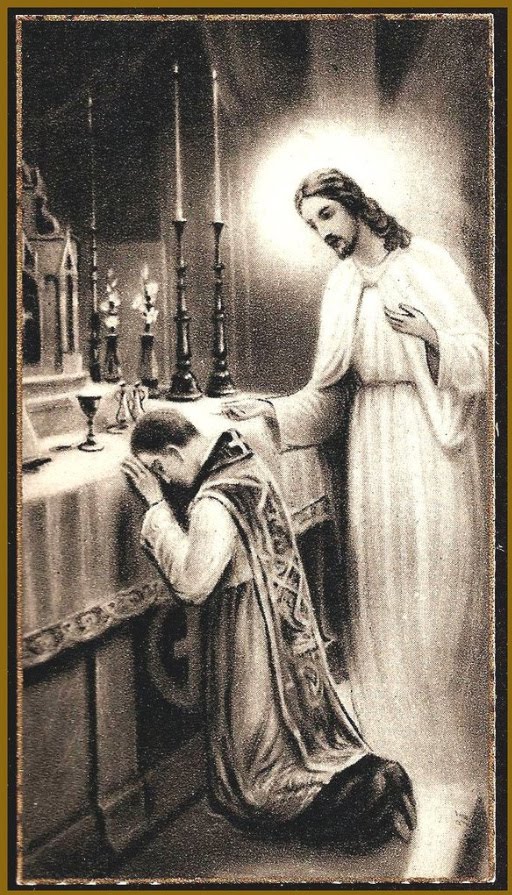 Epigonius, Bishop of the Royal Region of Bullas, declares “With the rule concerning continence and chastity [which] was already discussed in a previous council, let the same be taught with more emphasis. Namely that there are the three ranks that by virtue of their consecration, are under the same obligation of chastity, i.e. the bishop, the priest, and the deacon, and let them be instructed to keep their purity.
 Now if we look to the clergy abuse crisis, let us also apply this. They say that the priest who has been chaste will not struggle in this area, because he does not have material in his imagination to fuel the flames, that is the fomes peccati. If he fails in this regard, he is going to have problems. If he has already come in with disorders, such as homosexuality or pedophilia, he is going to tend toward disordered behavior even if it never manifests itself. Due to the breakdown in the piety of the faithful prior to Vatican II and the lowering of standards even before the Council, plenty of unhealthy men entered the seminary. They were unhealthy for more than one reason, it is not just the abusers, but those who married their housekeepers and asked to be returned to the lay state (as in the case of one particular ex-priest I knew). The problem that caused the clerical abuse scandal, as well as all the scandals in this regard within and outside the Church, is too much sex, rather than not enough.

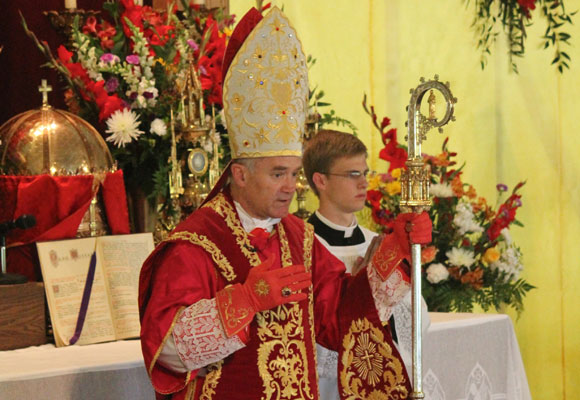


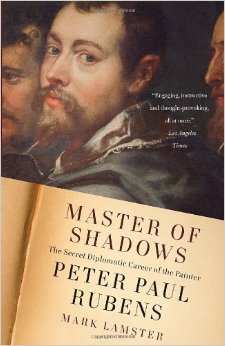


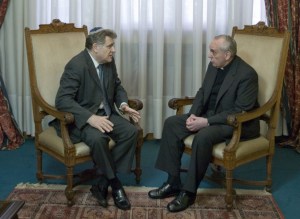 But is this some random statement from the Pope, off the cuff and without notes? Actually no, this is precisely what he believes. In 2010, a dialogue was published between then Cardinal Bergolio and Jewish Rabbi Abraham Skorka, titled On heaven and earth, on a wide range of issues. In that, Francis said the following [My emphasis in bold]: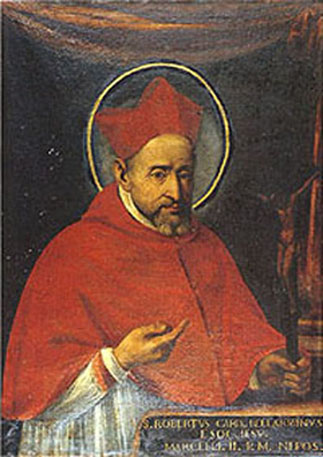

 The Instrumentum Laboris, or working document (in Latin literally, the device of the work) was issued last month, and it foretells essentially more of the same.
 Athanasius Contra Mundum